
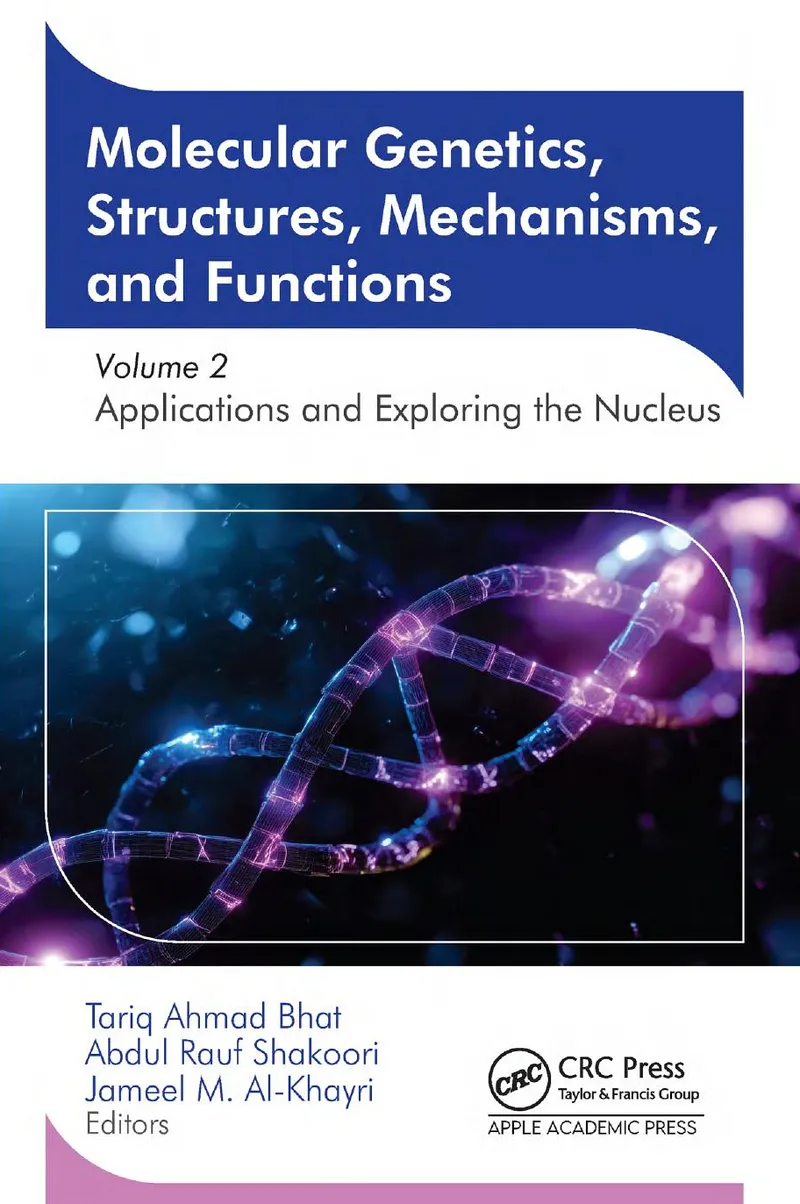

Molecular Genetics, Structures, Mechanisms, and Functions, Volume 2: Applications and Exploring the Nucleus
Molecular Genetics, Structures, Mechanisms, and Functions, Volume 2: Applications and Exploring the Nucleus is the second volume of a comprehensive two-volume work covering classical and advanced concepts in molecular genetics, genetic engineering, and gene manipulation. Published by Apple Academic Press in 2025, the volume connects fundamental principles of genetics with the molecular mechanisms underlying inheritance, genome organization, evolution, and the functional expression of genetic information.
The book is designed to bring a broad range of molecular genetics topics together in one resource, making it relevant to students and researchers as well as readers developing a deeper understanding of molecular biology, genetic engineering, and biotechnology.
About the Book
Volume 2 continues the discussion of genetic engineering by examining the relationship between genes and chromosomes and how genetic information is expressed and transmitted. It begins with classical genetic principles, including Mendel’s Laws of Inheritance, and progresses into molecular and genomic topics such as genome diversity, evolution, protein synthesis, DNA recombination, transposable elements, and chromosomal abnormalities.
The volume also explores how knowledge of molecular genetics can be applied beyond basic biological research, particularly in agricultural science, where genetic engineering and related technologies can contribute to crop improvement, production efficiency, food and pharmaceutical resources, and reduced dependence on pesticides.
Genes, Chromosomes, and Inheritance
A central theme of the book is the relationship between genes and chromosomes and the way genetic information produces observable characteristics. The discussion of Mendelian inheritance provides a foundation for understanding how traits are transmitted across generations, while later topics extend these principles into molecular genetics and genome-level mechanisms.
Topics include:
- Mendel’s Laws of Inheritance
- Genes and chromosomes
- Genome diversity
- Genetic evolution
- Protein synthesis
- DNA recombination and evolution
- Transposable elements
- Chromosomal aberrations
Molecular Genetics and the Nucleus
The volume examines the organization and behavior of genetic material within the nucleus, connecting chromosome structure with the mechanisms through which genetic information is maintained, recombined, and expressed. These topics provide a broader perspective on how changes in DNA and chromosomes can contribute to biological diversity and genetic variation.
Applications in Genetic Engineering and Agriculture
One of the important applications discussed in the book is genetic engineering in agricultural science. Genetic technologies can be used in crop improvement and agricultural biotechnology for purposes such as increasing crop yields, reducing production costs, improving crop quality, and decreasing reliance on pesticides.
The book therefore connects molecular genetics with practical applications in food production and biotechnology, illustrating the wider significance of genetic engineering for human welfare.
Companion Volume: Principles of Gene Manipulation and Genomics
The two-volume set is designed to provide a broad overview of molecular genetics and genetic engineering. Volume 1, Principles of Gene Manipulation and Genomics, introduces the principles and tools underlying modern genetic engineering, including recombinant DNA technology, restriction enzymes, vectors, mutagenesis, DNA library construction, and DNA sequencing.
It also addresses applications in areas such as human health, genetic disease prevention, food resources, environmental bioremediation, plant genetics, population genetics, and bacterial genetics. Together, the two volumes provide coverage ranging from fundamental genetic principles and recombinant technology to applications in medicine, agriculture, and industry.
Who Should Read This Book?
Molecular Genetics, Structures, Mechanisms, and Functions, Volume 2 can be useful for:
- Students of genetics and molecular biology
- Biotechnology and biological science students
- Researchers in molecular genetics and genetic engineering
- Scientists working in genetics and genomics
- Researchers in mutation breeding and plant breeding
- Faculty and instructors in genetics-related disciplines
- Readers seeking an integrated reference on molecular genetics and its applications
Final Thoughts
Molecular Genetics, Structures, Mechanisms, and Functions, Volume 2: Applications and Exploring the Nucleus provides a broad examination of inheritance, chromosomes, genome diversity, DNA recombination, genetic evolution, and the molecular basis of gene function. Its discussion of agricultural genetic engineering also demonstrates how molecular genetics can extend from fundamental biological principles to practical applications in food production and biotechnology.
As part of a two-volume set, the book provides a useful resource for readers interested in connecting the foundations of molecular genetics with contemporary applications of genetic engineering and biotechnology.
Book Information
Title: Molecular Genetics, Structures, Mechanisms, and Functions, Volume 2: Applications and Exploring the Nucleus
Publisher: Apple Academic Press
Publication Date: June 30, 2025
Edition: 1st
Language: English
ISBN-13: 978-1040332771
ASIN: B0FG1VZL61
Subjects: Molecular Genetics, Genetics, Genomics, Genetic Engineering, Gene Manipulation, DNA Recombination, Chromosomes, Genome Evolution, Protein Synthesis, Transposable Elements, Agricultural Biotechnology, Plant Genetics, Molecular Biology
Molecular Genetics, Structures, Mechanisms, and Functions, Volume 2 brings together classical genetics, molecular mechanisms, genome evolution, and practical applications of genetic engineering in a comprehensive reference for students and researchers.
Support the Creators!
If you enjoy this book, please consider supporting the author and publisher by purchasing a physical or digital copy. Buying official copies ensures authors can keep writing great books.