
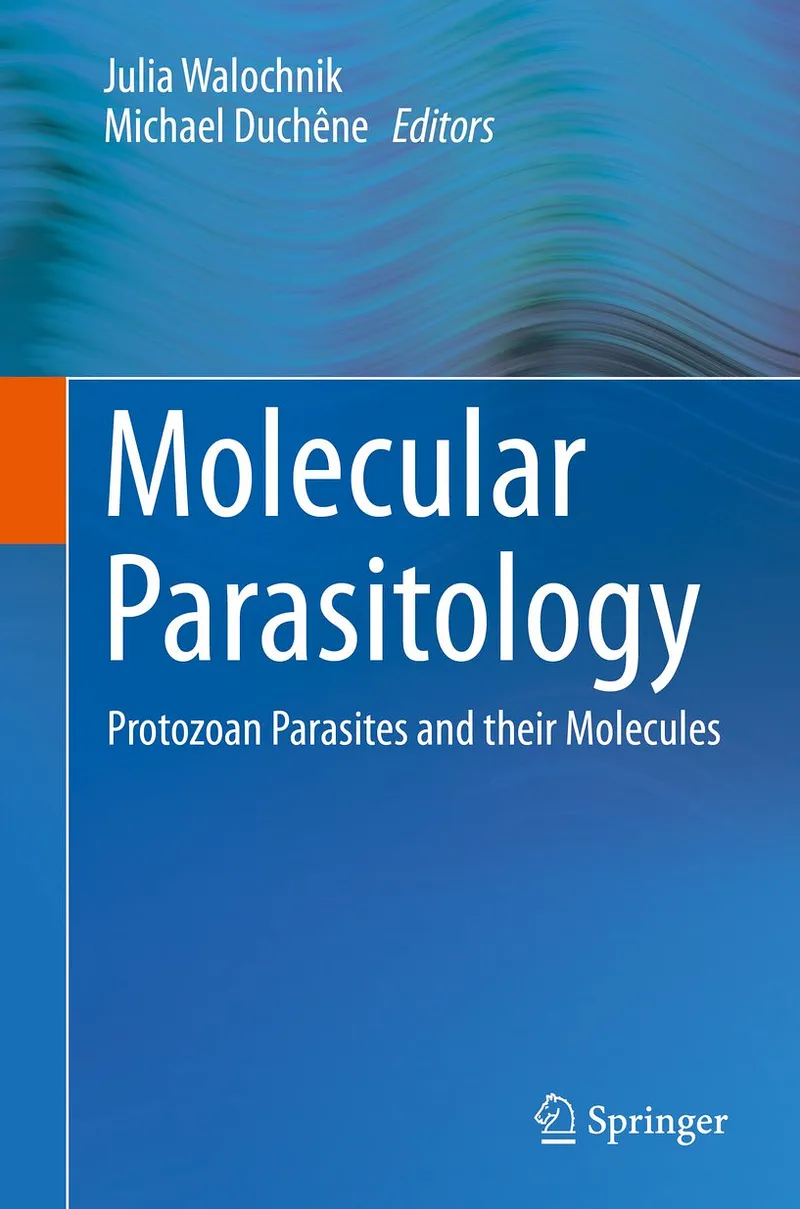

Molecular Parasitology: Protozoan Parasites and Their Molecules
Molecular Parasitology: Protozoan Parasites and Their Molecules is an advanced reference exploring the molecular biology of protozoan parasites and the biological mechanisms underlying parasitic diseases. Published by Springer, the book connects traditional parasitology with modern molecular and cellular biology.
With 556 pages, it provides detailed coverage for readers interested in the molecular basis of parasite biology, host–parasite interactions, and potential therapeutic targets.
About Molecular Parasitology
Protozoan parasites cause a wide range of important human and animal diseases.
Understanding these organisms at the molecular level provides insight into their cellular structures, metabolism, genetics, reproduction, virulence, and interactions with their hosts.
Protozoan Parasites
The book focuses on protozoan parasites and the molecules that regulate their biological processes.
Studying parasite molecules can help researchers understand how protozoa survive, reproduce, invade host tissues, evade immune responses, and adapt to changing environments.
Molecular Biology of Parasites
Modern molecular techniques have transformed the study of parasitic organisms.
Topics in molecular parasitology can include parasite genes, proteins, enzymes, signaling pathways, gene expression, molecular interactions, and cellular processes.
These areas provide a deeper understanding of parasite biology beyond morphology and life-cycle studies.
Host–Parasite Interactions
The relationship between a parasite and its host is central to understanding infectious disease.
Molecular studies can reveal how parasites interact with host cells, obtain nutrients, regulate infection, and respond to host immune defenses.
Understanding these interactions can also help identify potential targets for new interventions.
Molecular Targets and Drug Development
Parasite-specific molecules and metabolic pathways may provide opportunities for developing new treatments.
Research into essential enzymes, proteins, signaling pathways, and other molecular targets can contribute to the discovery and development of antiparasitic therapies.
Research Applications
Molecular parasitology is relevant to several areas of modern biomedical research, including:
- Parasite genomics
- Molecular diagnostics
- Protein and enzyme studies
- Host–parasite interactions
- Parasite metabolism
- Drug discovery
- Vaccine research
- Molecular epidemiology
Who Is This Book For?
Molecular Parasitology: Protozoan Parasites and Their Molecules can be useful for:
- Parasitology students
- Microbiology students
- Molecular biology students
- Biomedical science students
- Biotechnology students
- Researchers in infectious diseases
- Researchers studying protozoan parasites
- Graduate and postgraduate students
It is particularly suited to readers seeking a molecular and research-oriented perspective on parasitology.
Final Thoughts
Molecular Parasitology: Protozoan Parasites and Their Molecules provides an in-depth look at protozoan parasites through the perspective of modern molecular biology.
By examining parasite molecules, cellular processes, host–parasite interactions, molecular mechanisms, and potential therapeutic targets, the book helps connect parasitology with contemporary biomedical research.
With 556 pages, it is a substantial reference for advanced students, researchers, and professionals working in parasitology, microbiology, molecular biology, and infectious disease research.
Book Information
Title: Molecular Parasitology: Protozoan Parasites and Their Molecules
Publisher: Springer
Publication Date: July 5, 2018
Edition: Softcover reprint of the original 1st Edition, 2016
Language: English
Print Length: 556 pages
ISBN-10: 3709148790
ISBN-13: 978-3709148792
Subject: Molecular Parasitology / Protozoan Parasites / Molecular Biology / Infectious Diseases
Molecular Parasitology: Protozoan Parasites and Their Molecules explores the molecular biology, cellular mechanisms, metabolism, host–parasite interactions, and molecular targets of protozoan parasites, making it a valuable reference for advanced study and research in parasitology and infectious diseases.
Support the Creators!
If you enjoy this book, please consider supporting the author and publisher by purchasing a physical or digital copy. Buying official copies ensures authors can keep writing great books.