
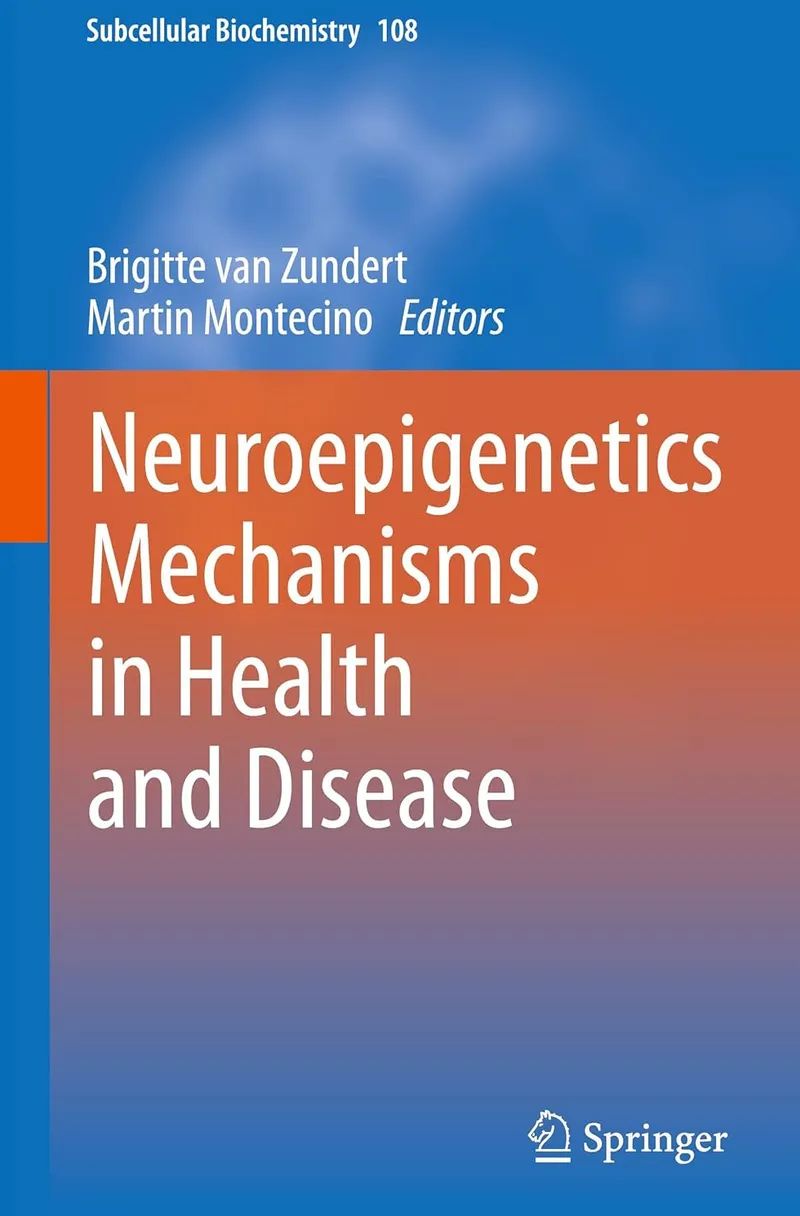

Neuroepigenetic Mechanisms in Health and Disease
Neuroepigenetic Mechanisms in Health and Disease is a contemporary reference exploring how epigenetic mechanisms regulate brain function in health and contribute to neurological and psychiatric disorders. Published by Springer, the book brings together contributions from leading investigators to examine landmark discoveries and recent developments across the rapidly expanding field of neuroepigenetics.
The book approaches neuroepigenetics from molecular, cellular, and integrative perspectives, connecting fundamental mechanisms of epigenetic regulation with complex processes such as learning, memory, brain function, and disease. It is designed to provide both newcomers and experienced researchers with a broader understanding of how epigenetic processes influence the nervous system.
About the Book
Epigenetic regulation plays an important role in controlling gene activity without changing the underlying DNA sequence. In neuroscience, these regulatory mechanisms are increasingly recognized as important components of brain development, neuronal function, behavior, learning, memory, and disease.
Neuroepigenetic Mechanisms in Health and Disease examines these processes through a collection of chapters covering foundational mechanisms as well as emerging applications and discoveries. The book provides an opportunity to understand how molecular epigenetic changes can be connected to cellular processes and ultimately to complex neurological functions and disorders.
Basic Mechanisms of Neuroepigenetics
The book begins with important concepts underlying epigenetic control and their relevance to neurobiology. Understanding these mechanisms provides the foundation for exploring how gene regulation can influence neuronal activity and brain function.
The discussion of fundamental epigenetic processes also provides context for the more specialized topics addressed throughout the book, helping readers connect molecular mechanisms with their consequences in the nervous system.
Epigenome Editing
An important area covered in the book is the emerging field of epigenome editing. Advances in molecular biology have created new approaches for studying and manipulating epigenetic regulation, allowing researchers to investigate the relationship between specific regulatory mechanisms and biological outcomes.
The inclusion of this topic highlights the growing experimental potential of neuroepigenetics and its relevance to modern neuroscience research.
Learning and Memory
Neuroepigenetic mechanisms are particularly interesting in relation to learning and memory, where changes in gene regulation can contribute to long-lasting alterations in neuronal function.
The book examines epigenetic control in these processes, helping readers understand how molecular events can participate in complex forms of brain plasticity and behavior.
Neurodegenerative and Neurological Diseases
The relationship between epigenetic regulation and disease is another major theme. The book explores neuroepigenetic mechanisms associated with neurodegenerative diseases and rare neurological disorders, providing perspectives on how alterations in epigenetic regulation may be involved in pathological changes in the nervous system.
These discussions connect basic neuroepigenetic biology with clinically relevant questions in neurological research.
Psychiatric Disorders and Brain Function
The book also considers the role of epigenetic mechanisms in psychiatric disorders. This area of research illustrates the complexity of interactions between molecular regulation, neuronal activity, behavior, and environmental influences.
By examining these relationships, the book contributes to a broader understanding of how epigenetic processes may participate in brain-related alterations associated with psychiatric conditions.
Environment, Behavior, and Neuroepigenetics
Neuroepigenetics extends beyond disease mechanisms to include the influence of experiences and environmental factors on brain function. The book discusses topics including drug abuse, environmental enrichment, and meditation, examining how such influences may affect the brain through epigenetic mechanisms.
These subjects demonstrate the broader relevance of neuroepigenetic research to human behavior, lifestyle, and contemporary society.
Molecular, Cellular, and Integrative Perspectives
A strength of the book is its multidisciplinary approach. Neuroepigenetic phenomena can be studied at several levels, from molecular modifications and gene regulation to cellular processes and integrated changes in brain function.
By bringing these perspectives together, the book provides readers with a more comprehensive view of neuroepigenetics rather than restricting the subject to a single level of biological organization.
Landmark Discoveries and Recent Advances
The chapters discuss both landmark scientific discoveries and recent advances in neuroepigenetics. This combination gives readers historical and conceptual context while introducing developments that are shaping current research.
Because neuroepigenetics is a rapidly growing field, this broad perspective can be particularly useful for researchers seeking to understand developments outside their own area of specialization.
Who Should Use This Book?
Neuroepigenetic Mechanisms in Health and Disease is suitable for:
- Neuroscience students and researchers
- Epigenetics researchers
- Molecular and cellular biologists
- Neurobiologists
- Biomedical scientists
- Researchers studying neurological diseases
- Researchers studying psychiatric disorders
- Junior scientists entering the field of neuroepigenetics
- Graduate and postgraduate students
- Experienced researchers seeking an interdisciplinary overview of neuroepigenetics
Final Thoughts
Neuroepigenetic Mechanisms in Health and Disease provides a broad examination of the mechanisms connecting epigenetic regulation with brain function, behavior, and neurological disease. Its coverage ranges from basic epigenetic mechanisms and epigenome editing to learning and memory, neurodegenerative diseases, rare neurological disorders, psychiatric conditions, and environmental influences.
For students entering the field, the book offers an introduction to major concepts and discoveries, while experienced researchers can use it to explore perspectives beyond their own specialization. Its combination of molecular, cellular, and integrative approaches makes it a valuable reference for understanding the rapidly developing field of neuroepigenetics.
Book Information
Title: Neuroepigenetic Mechanisms in Health and Disease
Publisher: Springer
Publication Date: January 17, 2025
Edition: 2024
Language: English
Print Length: 267 pages
ISBN-10: 3031759796
ISBN-13: 978-3031759796
Subjects: Neuroepigenetics, epigenetics, neuroscience, molecular biology, cellular neurobiology, brain function, learning and memory, neurological diseases, neurodegenerative diseases, psychiatric disorders
Neuroepigenetic Mechanisms in Health and Disease offers an interdisciplinary look at how epigenetic regulation shapes brain function and contributes to neurological and psychiatric health and disease.
Support the Creators!
If you enjoy this book, please consider supporting the author and publisher by purchasing a physical or digital copy. Buying official copies ensures authors can keep writing great books.