
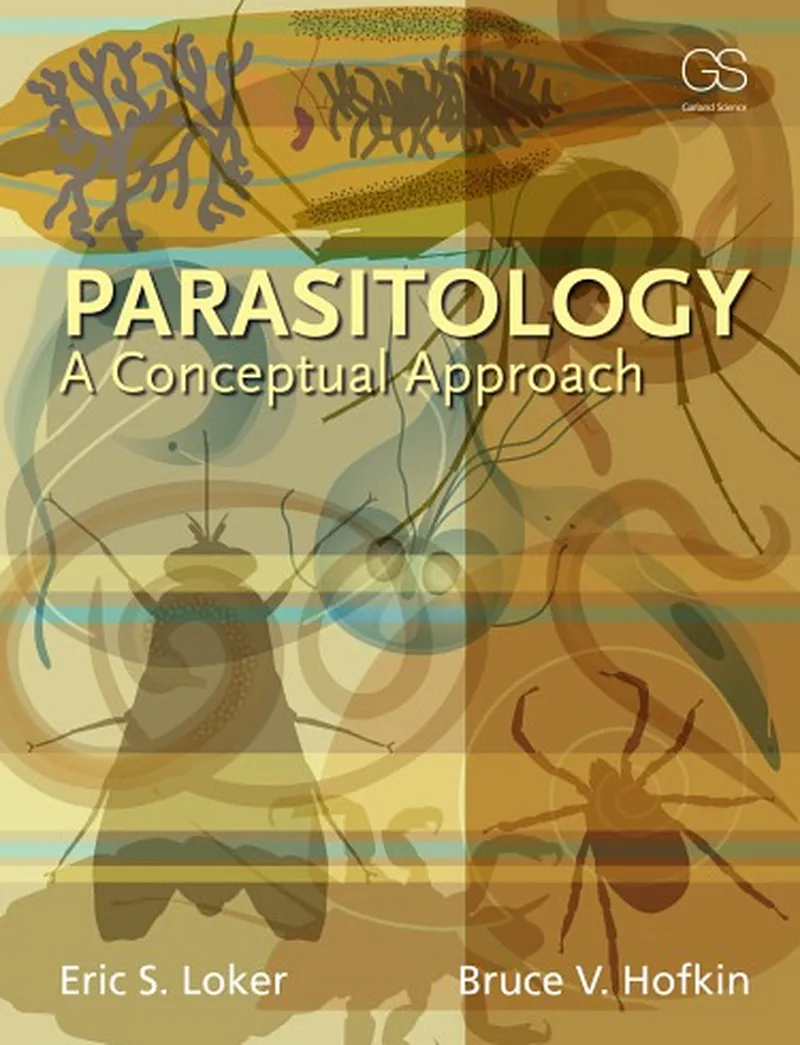

Parasitology: A Conceptual Approach, 1st Edition
Parasitology: A Conceptual Approach by Eric S. Loker is a comprehensive textbook that introduces the biology of parasites through an integrated and concept-driven approach. Published by Garland Science, the book explores parasite diversity, life cycles, host–parasite interactions, disease, and the ecological and evolutionary principles that shape parasitic organisms.
With 576 pages, it provides a substantial foundation for students studying parasitology, biology, microbiology, and related life sciences.
About the Book
Parasitology is the study of organisms that live in or on hosts and obtain resources from them.
Rather than treating parasites simply as isolated disease-causing organisms, this book approaches parasitology through broader biological concepts, helping readers understand how parasites evolve, survive, reproduce, and interact with their hosts and environments.
Parasite Diversity
Parasites occur across many different biological groups and display remarkable diversity.
The book introduces important groups of parasites and examines their biology, morphology, life cycles, transmission, and adaptations, providing a foundation for understanding their diversity.
Host–Parasite Interactions
The relationship between a parasite and its host is central to parasitology.
Readers can explore how parasites interact with host organisms, obtain nutrients, avoid host defenses, and influence host biology. These interactions also help explain the development and progression of parasitic diseases.
Parasite Life Cycles
Many parasites have complex life cycles involving multiple developmental stages and, in some cases, several hosts.
Understanding host requirements, transmission pathways, developmental stages, and environmental factors helps explain how parasites spread and maintain their populations.
Evolution and Ecology of Parasites
Parasites are shaped by evolutionary pressures and ecological relationships.
The book connects parasitology with concepts such as adaptation, natural selection, biodiversity, host specificity, ecological interactions, and parasite transmission, providing a broader understanding of parasite biology.
Medical Parasitology
Many parasites are important causes of human disease.
Understanding parasite biology provides a foundation for studying pathogenesis, transmission, host responses, diagnosis, treatment, and prevention of parasitic infections.
Who Is This Book For?
Parasitology: A Conceptual Approach can be useful for:
- Parasitology students
- Biology students
- Microbiology students
- Zoology students
- Medical students
- Veterinary science students
- Biomedical science students
- Graduate students
- Researchers studying parasites
It is particularly useful for readers who want to understand parasitology from a biological, ecological, and evolutionary perspective rather than focusing exclusively on clinical disease.
Final Thoughts
Parasitology: A Conceptual Approach provides an integrated introduction to the science of parasites, connecting parasite biology, life cycles, host–parasite interactions, ecology, evolution, and disease.
With 576 pages, it offers substantial coverage while emphasizing the underlying concepts that explain how parasites survive and interact with their hosts.
For students and researchers interested in parasitology, microbiology, ecology, evolution, medicine, and infectious diseases, this book provides a strong conceptual foundation.
Book Information
Title: Parasitology: A Conceptual Approach
Edition: 1st Edition
Author: Eric S. Loker
Publisher: Garland Science
Publication Date: March 2, 2015
Language: English
Print Length: 576 pages
ISBN-10: 9780815344735
ISBN-13: 978-0815344735
ASIN: 0815344732
Subject: Parasitology / Parasite Biology / Host–Parasite Interactions / Evolution / Ecology
Parasitology: A Conceptual Approach provides a comprehensive introduction to parasite diversity, life cycles, host–parasite interactions, evolution, ecology, and parasitic diseases, making it a valuable resource for students of parasitology, biology, microbiology, medicine, and related life sciences.
Support the Creators!
If you enjoy this book, please consider supporting the author and publisher by purchasing a physical or digital copy. Buying official copies ensures authors can keep writing great books.