
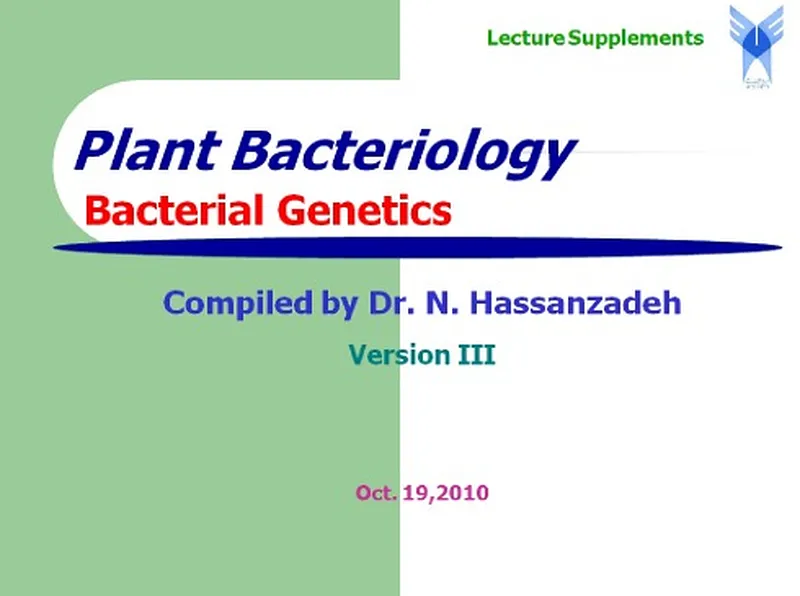

Plant Bacteriology: Bacterial Genetics – Nader Hassanzadeh
Plant Bacteriology: Bacterial Genetics by Nader Hassanzadeh is a lecture supplement that introduces the fundamental principles of bacterial genetics and the organization of prokaryotic genomes. The material provides students with a clear overview of how bacterial genetic information is organized, maintained, and transferred.
The document is particularly useful for students studying plant bacteriology, microbiology, bacterial genetics, and related biological sciences. It connects the structure of bacterial genomes with genetic elements and recombinant DNA technology, providing a foundation for understanding genetic variation and gene transfer in bacteria.
About the Lecture Supplement
The material focuses on the genetic organization of prokaryotes, explaining the major components of bacterial genomes and the mechanisms that contribute to genetic diversity. It also introduces important concepts in recombinant DNA technology and the movement of genetic material between bacteria.
Prokaryotic Genome Organization
The supplement examines the organization of bacterial DNA, including the structure and role of bacterial chromosomes and plasmids. Understanding these genetic components is essential for studying how bacteria store and express genetic information.
Bacterial Chromosomes and Plasmids
Chromosomes contain the primary genetic information of bacterial cells, while plasmids represent additional genetic elements that can carry specific traits. The material highlights their importance in bacterial genetics and provides a foundation for understanding how genetic characteristics can be maintained or transferred.
Mobile Genetic Elements
A key topic is the role of mobile genetic elements in bacterial gene transfer. These elements can contribute to the movement of genes between bacterial cells and may play an important role in the development and spread of traits associated with bacterial pathogenicity.
Diversity of Bacterial Genomes
The lecture supplement also compares the sizes and numbers of genes found in different organisms. These comparisons illustrate the considerable diversity of genomes across bacteria and other organisms and help place bacterial genomes within a broader biological context.
Recombinant DNA Technology
The material introduces recombinant DNA technology as an important area of bacterial genetics. This provides students with basic concepts needed to understand how genetic material can be studied, manipulated, and transferred in laboratory and research settings.
Who Should Use This Lecture Supplement?
- Undergraduate students studying plant bacteriology
- Students taking courses in microbiology and bacterial genetics
- Biology and biotechnology students
- Students reviewing prokaryotic genome organization
- Learners studying bacterial plasmids and mobile genetic elements
- Students seeking supplementary material for lectures on recombinant DNA technology
Final Thoughts
Plant Bacteriology: Bacterial Genetics provides a focused introduction to the genetic foundations of bacteria. By covering prokaryotic genome organization, chromosomes, plasmids, mobile genetic elements, genome diversity, gene transfer, and recombinant DNA technology, the lecture supplement offers a useful study resource for students developing their understanding of bacterial genetics.
Book Information
Title: Plant Bacteriology: Bacterial Genetics
Author: Nader Hassanzadeh
Type: Lecture Supplement
Language: English
Subjects: Plant Bacteriology, Bacterial Genetics, Microbiology, Prokaryotic Genomes, Bacterial DNA, Plasmids, Mobile Genetic Elements, Gene Transfer, Recombinant DNA Technology
Plant Bacteriology: Bacterial Genetics is a useful lecture supplement for understanding the organization, diversity, and transfer of genetic information in bacteria.