
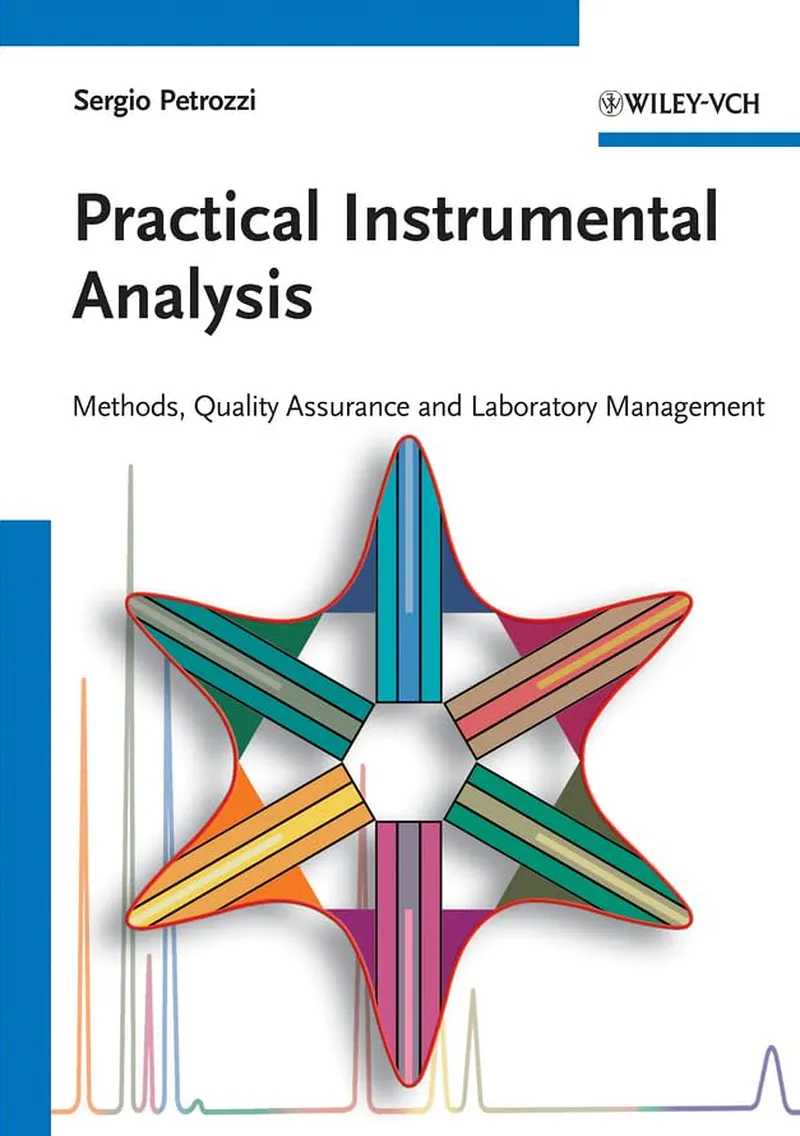

Practical Instrumental Analysis: Methods, Quality Assurance and Laboratory Management
Practical Instrumental Analysis: Methods, Quality Assurance and Laboratory Management is a practical workbook designed to introduce students to important methods of instrumental and analytical chemistry while developing the practical skills needed to perform laboratory experiments, develop analytical methods, and conduct method validation.
The book takes a problem-solving approach to analytical chemistry, emphasizing that laboratory analyses should produce results that are fit for purpose. Alongside theoretical explanations, it provides detailed experimental instructions covering a range of analytical techniques used in chemistry and related fields.
About the Book
The book combines theoretical descriptions of analytical methods with practical laboratory exercises. Its approach is designed to help students understand not only how analytical techniques work, but also how analytical chemists select, develop, validate, and apply methods to solve real laboratory problems.
Analytical Methods and Method Development
The book introduces important analytical methods and focuses on the practical working techniques used by analytical chemists. Particular attention is given to method development and validation, helping students understand how analytical procedures can be designed to produce results appropriate for their intended purpose.
Sixteen Laboratory Experiments
A central feature of the book is its collection of 16 analytical chemistry experiments. The experiments reflect laboratory curricula commonly used in universities and universities of applied sciences and provide hands-on experience with a variety of analytical techniques.
Chromatography and Instrumental Techniques
The practical exercises include chromatographic procedures, atom spectrometric methods, sensors, and specialized analytical techniques. Topics include methods such as field-flow fractionation, flow injection analysis, and nitrogen determination according to Kjeldahl.
Practical Laboratory Workflow
Beyond analytical techniques themselves, the book addresses the practical organization of laboratory work. It provides guidance on literature and database research, laboratory logs, experimental workflow, and the preparation of technical reports.
Quality Management and Laboratory Safety
The book includes an introduction to quality management and a detailed appendix on safety in analytical laboratories. It also introduces the Globally Harmonized System of Classification and Labelling of Chemicals (GHS), providing students with an important foundation for understanding chemical hazard classification and labeling.
Technical Reports and Evaluation
Students are also introduced to writing technical reports and evaluating laboratory experiments. Guidelines for grading and assessment help instructors and laboratory assistants evaluate practical work while giving students a clearer understanding of expectations in analytical laboratory courses.
A Practical Workbook for Analytical Chemistry
One of the book’s main strengths is the combination of theory and detailed experimental instructions. The procedures are designed to be sufficiently comprehensive that many of the measurements can be performed without requiring extensive additional literature.
This makes the book particularly suitable for practical laboratory courses in analytical chemistry and related disciplines where students need to develop both technical laboratory skills and an understanding of analytical problem-solving.
Who Should Use This Book?
- Students studying analytical and instrumental chemistry
- Chemistry and biotechnology students
- Food technology and environmental technology students
- Laboratory and internship students
- Laboratory instructors and teaching assistants
- Lecturers teaching analytical chemistry practical courses
- Students learning analytical method development and validation
Final Thoughts
Practical Instrumental Analysis: Methods, Quality Assurance and Laboratory Management provides a practical and structured introduction to instrumental analysis and analytical laboratory work. By combining analytical theory, 16 laboratory experiments, method development, validation, quality management, laboratory documentation, safety, and technical reporting, it provides a useful training resource for students and instructors in analytical chemistry and related fields.
Book Information
Title: Practical Instrumental Analysis: Methods, Quality Assurance and Laboratory Management
Publisher: Wiley-VCH
Publication Date: September 24, 2012
Edition: 1st
Print Length: 493 pages
ISBN-13: 978-3527665907
ASIN: B00DFB3LB6
Subjects: Instrumental Analysis, Analytical Chemistry, Laboratory Management, Quality Assurance, Analytical Methods, Method Validation, Chromatography, Spectrometry, Sensors, Laboratory Experiments, Laboratory Safety, Chemical Analysis, Biotechnology, Food Technology, Environmental Technology
Practical Instrumental Analysis is a hands-on workbook combining analytical theory, laboratory experiments, method validation, quality assurance, safety, and practical laboratory management for students and instructors.
Support the Creators!
If you enjoy this book, please consider supporting the author and publisher by purchasing a physical or digital copy. Buying official copies ensures authors can keep writing great books.