
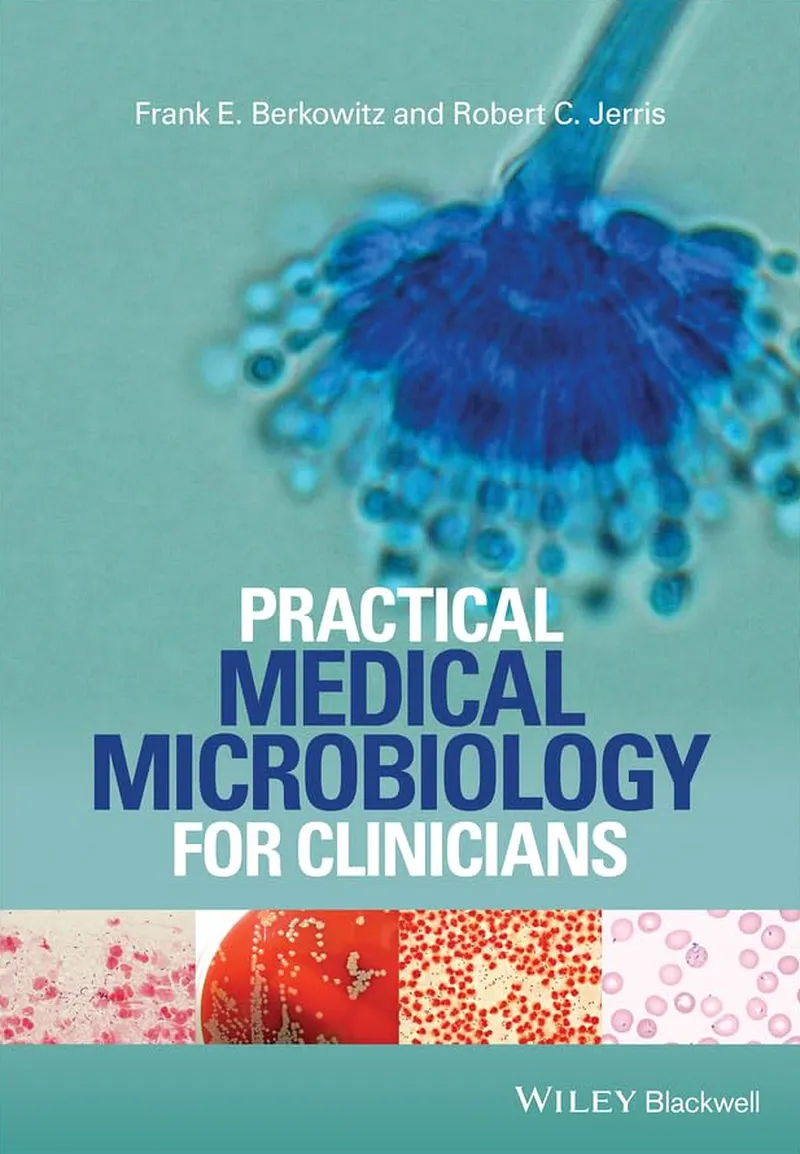

Practical Medical Microbiology for Clinicians
Practical Medical Microbiology for Clinicians is a clinically focused introduction to medical microbiology and infectious diseases, designed to help readers understand the microorganisms responsible for human disease and their relevance to patient care. The book covers the major groups of medically important pathogens, including bacteria, viruses, fungi, and parasites, while connecting microbiological knowledge with clinical infections and laboratory practice.
Microbiology is an essential component of infectious disease medicine. Understanding how microorganisms are classified, identified, and associated with specific diseases can help clinicians interpret microbiological information and communicate more effectively with diagnostic laboratories.
About the Book
Published by Wiley-Blackwell, this first edition takes a systematic approach to medical microbiology. It introduces the taxonomy and classification of human pathogens and examines microorganisms within their respective taxonomic groups.
The book also discusses the major clinical infections caused by different organisms and uses clinical case studies to demonstrate their effects on patients. This combination of microbiology and clinical context makes the text particularly useful for readers who want to connect laboratory knowledge with the practical management of infectious diseases.
Medical Microbiology and Clinical Practice
Medical microbiology plays a central role in the diagnosis and management of infectious diseases. Clinicians frequently rely on microbiology laboratories to identify pathogens and provide information that can support patient care.
Practical Medical Microbiology for Clinicians is designed to help readers understand:
- Medically important microorganisms
- The relationships between different groups of organisms
- The taxonomy of human pathogens
- Clinical infections caused by specific microorganisms
- Isolation and identification in the microbiology laboratory
- The role of microbiological testing in clinical practice
- Communication between clinicians and laboratory microbiologists
By linking microorganisms with the diseases they cause, the book provides a structured foundation for understanding clinical infectious diseases.
Bacteria, Viruses, Fungi, and Parasites
The book covers the major categories of pathogens involved in human infectious diseases:
- Bacteria – important bacterial pathogens and their relationship to clinical disease.
- Viruses – viruses associated with human infections and their clinical significance.
- Fungi – medically important fungi and fungal diseases.
- Parasites – parasitic organisms responsible for infections in humans.
The systematic organization of these organisms helps readers understand how pathogens are related and how different groups can be studied within medical microbiology.
The Microbiology Laboratory
An important feature of the book is its attention to the relationship between clinical medicine and the microbiology laboratory. Understanding how microorganisms are isolated and identified can help clinicians interpret laboratory findings and make better use of microbiological information.
The text is therefore useful not only for microbiology students and laboratory professionals but also for clinicians who need a stronger understanding of the processes involved in diagnostic microbiology.
The book helps bridge the gap between the clinical setting and the laboratory by explaining the role of microbiologists and the methods used to investigate infectious organisms.
Clinical Cases and Infectious Diseases
Clinical case studies are used throughout the book to demonstrate the effects of different microorganisms and place microbiological concepts within a patient-centered context.
This approach can help readers connect:
- Microorganisms with clinical disease
- Laboratory findings with patient presentations
- Pathogen identification with infectious disease diagnosis
- Microbiological knowledge with clinical decision-making
The use of clinical examples makes the subject more relevant to students and healthcare professionals involved in the study or management of infectious diseases.
Who Should Use This Book?
This book may be useful for:
- Medical students
- Medical microbiology students
- Infectious disease trainees
- Clinical microbiology students
- Medical microbiology instructors
- Physicians and clinicians
- Clinical laboratory professionals
- Microbiology teachers
- Researchers studying infectious diseases
- Students studying virology and related biomedical sciences
Final Thoughts
Practical Medical Microbiology for Clinicians provides a clinically oriented approach to understanding the microorganisms responsible for human infectious diseases. By covering bacteria, viruses, fungi, and parasites alongside taxonomy, laboratory identification, and clinical case studies, the book helps connect fundamental microbiology with real-world patient care.
Its emphasis on communication between clinicians and microbiologists also makes it particularly valuable for healthcare professionals who want to better understand microbiological testing and the role of the diagnostic laboratory in infectious disease practice.
For medical students, clinicians, teachers, and researchers seeking a structured introduction to medical microbiology and infectious diseases, this book offers a useful combination of microbiological principles, laboratory knowledge, and clinical applications.
Book Information
Title: Practical Medical Microbiology for Clinicians
Publisher: Wiley-Blackwell
Publication Date: February 15, 2016
Edition: 1st
Language: English
Print Length: 480 pages
ASIN: 1119066743
ISBN-10: 9781119066743
ISBN-13: 978-1119066743
Subjects: Medical Microbiology / Clinical Microbiology / Infectious Diseases / Bacteriology / Virology / Medical Mycology / Parasitology / Diagnostic Microbiology / Clinical Medicine
Practical Medical Microbiology for Clinicians is a clinically focused resource that connects the study of medically important microorganisms with laboratory identification, infectious diseases, and patient-centered clinical practice.
Support the Creators!
If you enjoy this book, please consider supporting the author and publisher by purchasing a physical or digital copy. Buying official copies ensures authors can keep writing great books.