

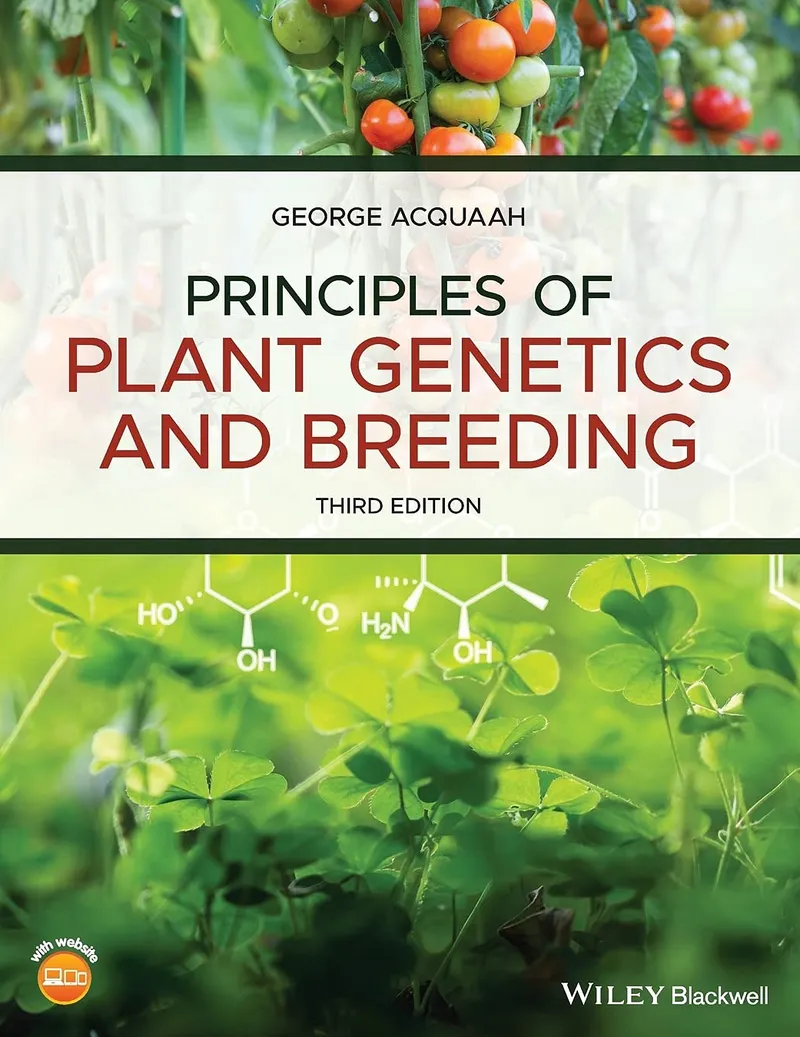

Principles of Plant Genetics and Breeding
Principles of Plant Genetics and Breeding is a comprehensive textbook that brings together the fundamental principles of plant genetics with the practical methods used in modern plant breeding. Published by Wiley-Blackwell in its third edition, the book integrates classical breeding approaches with molecular genetics and emerging technologies to explain how new crop varieties and improved plants can be developed.
The book connects theory with practical breeding strategies and organizes its material around the stages of an actual plant breeding project. It covers subjects ranging from plant reproductive systems and germplasm resources to molecular breeding, breeding objectives, biotechnology, and the wider marketing and societal considerations associated with developing new plant varieties.
About the Book
Modern plant breeding draws on genetics, molecular biology, biotechnology, agronomy, and related disciplines. Principles of Plant Genetics and Breeding provides a broad introduction to these interconnected areas while maintaining a strong focus on how genetic principles are applied in real breeding programs.
The third edition contains extensively revised material reflecting developments in molecular genetics and plant breeding. It is particularly useful for readers who want to understand both established breeding methods and newer molecular and genome-based approaches.
Plant Reproductive Systems and Breeding Foundations
A strong understanding of plant reproductive biology is essential for designing effective breeding programs. The book introduces plant reproductive systems and explains their importance when selecting breeding strategies and developing new varieties.
These foundational concepts provide the background needed to understand how breeders manage crosses, genetic variation, and selection within plant populations.
Germplasm and Genetic Resources
Plant breeding depends on access to diverse genetic resources. The book examines germplasm and its importance as a source of useful characteristics for crop improvement.
Understanding available genetic diversity allows breeders to identify and combine desirable traits while developing plants suited to particular agricultural and environmental requirements.
Classical Plant Breeding
Traditional breeding methods remain an important part of crop improvement. The book explains classical approaches alongside the genetic principles that make selection and hybridization effective.
By placing these techniques within a broader breeding framework, the text helps readers understand how breeders move from identifying useful variation to selecting and evaluating improved plant material.
Molecular Genetics and Molecular Breeding
A major emphasis of the third edition is the growing role of molecular genetics in plant breeding. The book provides updated coverage of molecular breeding techniques and explains how molecular information can complement conventional breeding methods.
It also discusses a broad range of molecular markers, including Allozyme, RFLP, RAPD, SSR, ISSR, DAMD, AFLP, SNPs, and ESTs. The expanded comparison of these markers provides a useful reference for understanding their different applications in plant genetic analysis and breeding.
Modern Breeding Technologies and Genome Editing
The revised edition incorporates several newer approaches that have expanded the possibilities of plant improvement. Topics include zinc finger nucleases, oligonucleotide-directed mutagenesis, RNA-dependent DNA methylation, reverse breeding, and genome editing.
The book also addresses newer developments such as CRISPR genome editing and grafting on genetically modified stock, illustrating how advances in molecular biology are influencing contemporary plant breeding.
Breeding Objectives and Crop Improvement
Plant breeders work toward different objectives depending on the crop, environment, agricultural system, and intended use. The book examines common breeding objectives and the strategies used to achieve them.
This perspective helps connect genetic and molecular techniques with the practical goal of developing plants with useful and desirable characteristics.
Industry Applications and Societal Considerations
Plant breeding is not limited to laboratory research. Successful varieties must also have practical value, and their development can involve economic, marketing, and societal considerations.
Updated Industry Highlights provide examples of how breeding methods can be applied to real-world problems, helping readers connect textbook principles with applications in the plant-breeding industry.
A Practical and Structured Approach to Plant Breeding
The organization of the third edition follows the stages of an actual breeding project, giving the material a practical progression from foundational concepts to breeding technologies and applications.
Numerous illustrations, self-assessment questions, key references, suggested readings, and additional online resources support independent study and help readers review important concepts.
Who Should Use This Book?
- Advanced undergraduate students studying plant science
- Graduate students in plant breeding and genetics
- Students of plant biotechnology
- Plant science and agricultural science students
- Researchers working in plant genetics and crop improvement
- Professionals involved in plant breeding and biotechnology
- Readers interested in classical and molecular plant breeding techniques
Final Thoughts
Principles of Plant Genetics and Breeding provides a broad and detailed examination of how genetic principles and breeding technologies are used to improve crops and other plants. Its integration of classical methods with molecular breeding makes it particularly relevant to students and professionals seeking to understand the evolution of modern plant breeding.
With extensive coverage of germplasm, reproductive systems, molecular markers, genome editing, breeding objectives, and practical industry applications, the third edition serves as a substantial reference for advanced study in plant genetics, breeding, and biotechnology.
Book Information
Title: Principles of Plant Genetics and Breeding
Publisher: Wiley-Blackwell
Publication Date: December 21, 2020
Edition: 3rd
Language: English
Print Length: 848 pages
ISBN-10: 1119626323
ISBN-13: 978-1119626329
Subjects: Plant Genetics, Plant Breeding, Molecular Breeding, Crop Improvement, Plant Biotechnology, Molecular Genetics, Germplasm, Genetic Markers, Genome Editing, Agricultural Science
Principles of Plant Genetics and Breeding is a comprehensive guide to the classical principles, molecular techniques, and modern technologies used to develop improved crops and plant varieties.
Support the Creators!
If you enjoy this book, please consider supporting the author and publisher by purchasing a physical or digital copy. Buying official copies ensures authors can keep writing great books.