
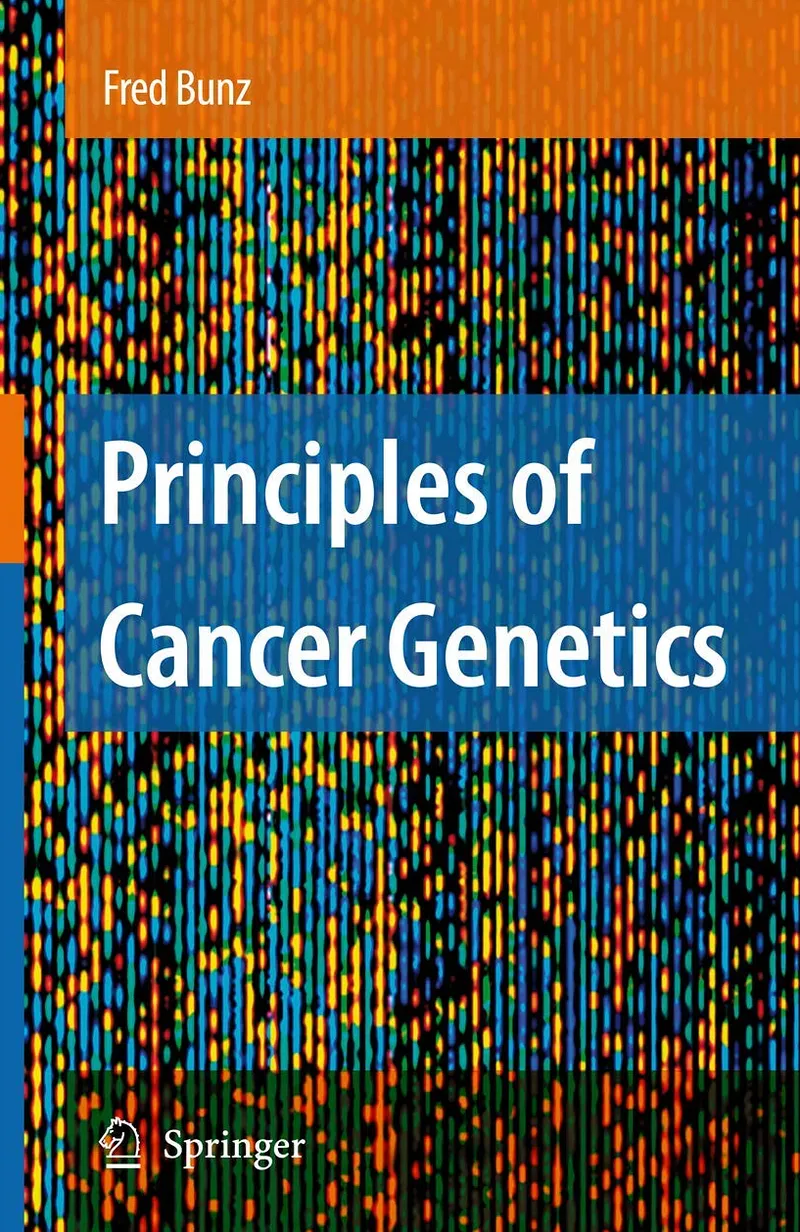

Principles of Cancer Genetics
Principles of Cancer Genetics provides an accessible introduction to the genetic basis of cancer and the principles underlying the cancer gene theory. Published by Springer, the book addresses a field characterized by a vast and continually expanding body of information, bringing its central concepts together into a framework that students and researchers can use to understand how genetic alterations contribute to cancer development.
Rather than attempting to cover every cancer-associated gene or genetic abnormality, the book focuses on representative genes involved in common cancers. It emphasizes the origins of cancer genes and uses evolutionary theory to explain why cell clones carrying cancer-associated genetic alterations can expand over time. This focused approach makes the book particularly suitable for readers who already have a foundation in genetics, biology, and biochemistry.
About the Book
Cancer genetics encompasses hundreds of genes, genetic alterations, disease states, and risk factors. Understanding how these individual discoveries fit together can be challenging, especially for students approaching the subject for the first time.
Principles of Cancer Genetics addresses this challenge by concentrating on firmly established concepts and organizing them into a coherent framework. The book provides enough background in tumor biology to explain the role of genetic changes in neoplastic growth without attempting to serve as a comprehensive textbook of cancer pathology.
The Genetic Basis of Cancer
At the center of the book is the concept that cancer can be understood through the accumulation and effects of genetic alterations. The text introduces the cancer gene theory and examines how changes affecting important genes can influence cellular behavior and contribute to neoplastic growth.
By focusing on representative cancer genes rather than an exhaustive catalog of genetic abnormalities, the book helps readers develop a conceptual understanding of cancer genetics that can be applied to different cancers.
Origins of Cancer Genes
The book places particular emphasis on the origins of cancer genes and the genetic events that contribute to cancer. Understanding where cancer-associated genetic alterations come from provides an important foundation for interpreting their biological consequences.
This perspective allows readers to move beyond memorizing individual genes and instead develop a broader understanding of how genetic changes can become involved in the development of cancer.
Evolutionary Theory and Clonal Expansion
An important feature of Principles of Cancer Genetics is its application of evolutionary theory to cancer. The book explains why cell populations carrying advantageous cancer-associated genetic alterations may expand and become dominant within a developing tumor.
This evolutionary perspective provides a useful framework for understanding cancer as a process involving genetic variation, selection, and clonal expansion.
Representative Genes and Common Cancers
Because the field of cancer genetics is exceptionally broad, the book concentrates on the most representative genes associated with common cancers. This selective approach makes the material more manageable while still introducing the major genetic principles needed to understand cancer.
The emphasis on representative examples helps students connect general genetic concepts with specific cancer-related applications.
Cancer Genetics for Students and Medical Trainees
The book is designed for advanced undergraduates who have completed introductory courses in genetics, biology, and biochemistry. It is also intended for medical students and medical house staff preparing for board examinations.
Its focused treatment makes it useful as a primer for readers considering further study in oncology or cancer research, while students with a general interest in cancer can use it as an accessible overview of the genetic concepts underlying the disease.
A Focused Approach to Cancer Biology
Rather than covering the full spectrum of tumor pathobiology, the book discusses only the aspects needed to understand how genetic alterations contribute to neoplastic growth. This keeps the discussion centered on cancer genetics and avoids overwhelming readers with information outside the primary subject.
The emphasis on established concepts also provides a structured foundation for further study in oncology, medical genetics, molecular biology, and cancer research.
Who Should Use This Book?
- Advanced undergraduate students studying genetics, biology, or biochemistry
- Medical students studying cancer and medical genetics
- Medical trainees preparing for board examinations
- Students interested in oncology
- Students considering careers in cancer research
- Researchers and professionals seeking a concise introduction to cancer genetics
- Readers looking for an accessible overview of the genetic basis of cancer
Final Thoughts
Principles of Cancer Genetics offers a focused introduction to one of the most important areas of modern cancer biology. By consolidating the central concepts of cancer gene theory and emphasizing representative cancer genes, the book helps readers understand the genetic mechanisms underlying neoplastic growth without requiring them to navigate the enormous volume of specialized cancer genetics literature.
Its emphasis on the origins of cancer genes and evolutionary explanations for clonal expansion makes it particularly valuable as a foundation for further study. For advanced students, medical trainees, and readers preparing to explore oncology or cancer research, this book provides a clear starting point for understanding the principles of cancer genetics.
Book Information
Title: Principles of Cancer Genetics
Publisher: Springer
Publication Date: December 20, 2007
Edition: 2008
Print Length: 326 pages
ISBN-13: 978-1402067846
ASIN: B004L62FZM
Subjects: Cancer Genetics, Medical Genetics, Cancer Biology, Molecular Biology, Oncology, Genetic Alterations, Cancer Gene Theory, Evolutionary Theory, Neoplastic Growth
Principles of Cancer Genetics provides a focused and accessible framework for understanding how genetic alterations, cancer genes, and evolutionary processes contribute to the development and progression of cancer.
Support the Creators!
If you enjoy this book, please consider supporting the author and publisher by purchasing a physical or digital copy. Buying official copies ensures authors can keep writing great books.