
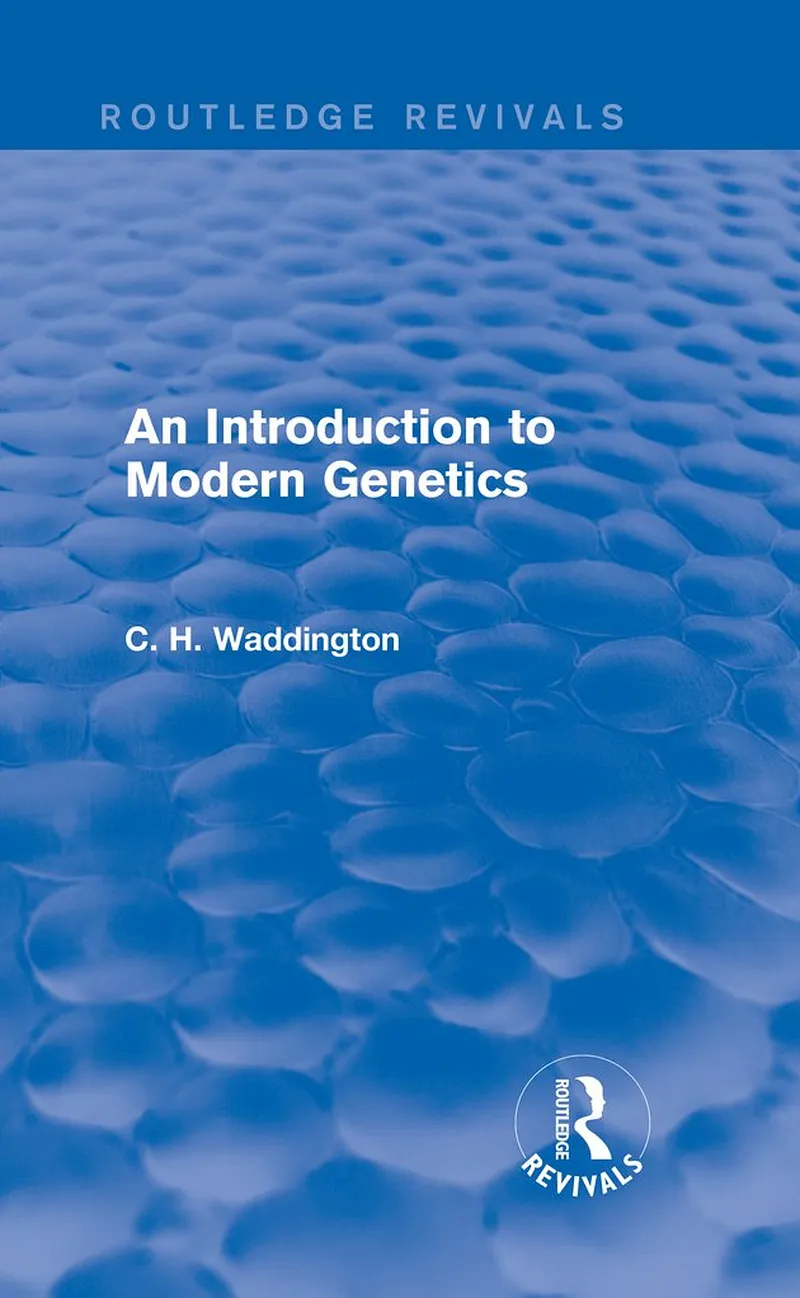

An Introduction to Modern Genetics (Routledge Revivals: Selected Works of C. H. Waddington)
An Introduction to Modern Genetics by C. H. Waddington is a historically significant introduction to genetics, originally published in 1939 and later reissued as part of the Routledge Revivals: Selected Works of C. H. Waddington collection. The book provides an account of the principal ideas and developments in genetics as they stood during an important period in the history of the field.
Written for students with limited previous knowledge of genetics, the book introduces fundamental genetic principles in an accessible and structured manner. It also places particular emphasis on the connections between genetics and neighboring scientific disciplines, reflecting Waddington’s interest in the broader relationships between biological fields.
About the Book
First published in 1939, An Introduction to Modern Genetics documents the changing understanding of genetics during the early development of modern genetic science. Waddington illustrates the major principles of the field through references to authoritative investigations available at the time.
Because the book is a historical work, it is especially valuable for readers interested in the development of genetic thought and how genetic concepts were understood during the first half of the twentieth century.
Foundations of Genetics
The book is designed as an introduction for students whose previous knowledge of genetics is limited. It presents the main principles of genetics in a way intended to establish a foundation before readers move on to more specialized material.
This makes the work useful for understanding not only individual genetic concepts but also the intellectual framework within which genetics developed.
Genetics and Related Fields
A distinctive feature of Waddington’s approach is his attention to the overlap between genetics and other areas of scientific inquiry. The book recognizes that important scientific advances can emerge at the boundaries between disciplines.
This interdisciplinary perspective is particularly interesting from a historical viewpoint because it illustrates how genetics was connected with broader questions in biology and related sciences.
Genetics Through Contemporary Research
Waddington supports his discussion with references to investigations considered authoritative and recent at the time of the book’s original publication. These references provide historical context for understanding the evidence and research that shaped genetic thinking during the period.
For modern readers, this offers an opportunity to explore how scientific knowledge develops through observation, experimentation, debate, and the gradual refinement of ideas.
Historical Perspective on Genetic Science
Unlike a contemporary genetics textbook, this book should be viewed within the scientific context of its original publication. Its value lies partly in showing how genetic principles were presented before many of the discoveries that would later transform molecular genetics.
Students and researchers interested in the history of genetics and biology can therefore use the book as a window into an earlier stage of genetic science.
Annotated Bibliographies and Further Reading
The book includes annotated bibliographies suggesting additional reading. These references provide useful pathways for readers who want to investigate the scientific literature and historical development of genetics in greater depth.
For students and researchers exploring the history of biological thought, these bibliographic resources add context beyond the main text.
Routledge Revivals
This edition forms part of the Routledge Revivals: Selected Works of C. H. Waddington series, bringing an earlier scientific work back into circulation for contemporary readers.
The revival format makes the book accessible to students, historians, and researchers interested in classic scientific literature and the development of ideas that influenced twentieth-century biology.
Who Should Use This Book?
An Introduction to Modern Genetics may be particularly useful for:
- Students beginning their study of genetics.
- Readers interested in the history of genetics.
- Students and researchers studying the history of biology.
- Readers interested in C. H. Waddington’s scientific work.
- Researchers examining the development of genetic concepts.
- Students exploring the relationship between genetics and related scientific disciplines.
- Academic readers interested in historical scientific literature.
Final Thoughts
An Introduction to Modern Genetics offers more than an introduction to genetics in the modern textbook sense. As a work originally published in 1939, it provides a valuable historical record of the principles, research, and scientific perspectives that shaped genetics during an important period in its development.
Its accessible organization, interdisciplinary emphasis, references to contemporary investigations, and annotated suggestions for further reading make this Routledge Revival a useful resource for anyone interested in both the foundations of genetics and the history of genetic science.
Book Information
Title: An Introduction to Modern Genetics
Series: Routledge Revivals: Selected Works of C. H. Waddington
Author: C. H. Waddington
Publisher: Routledge
Publication Date: March 17, 2016
Edition: 1st
Language: English
Print Length: 452 pages
ISBN-13: 978-1317352044
ASIN: B0CYHFZPDT
Subjects: Genetics, Introduction to Genetics, History of Genetics, History of Biology, Genetic Principles, Biological Sciences, Interdisciplinary Biology, Scientific History
An Introduction to Modern Genetics is a historically important introduction to early genetic science, offering students and researchers insight into the principles, research, and interdisciplinary connections that shaped genetics in the first half of the twentieth century.
Support the Creators!
If you enjoy this book, please consider supporting the author and publisher by purchasing a physical or digital copy. Buying official copies ensures authors can keep writing great books.