
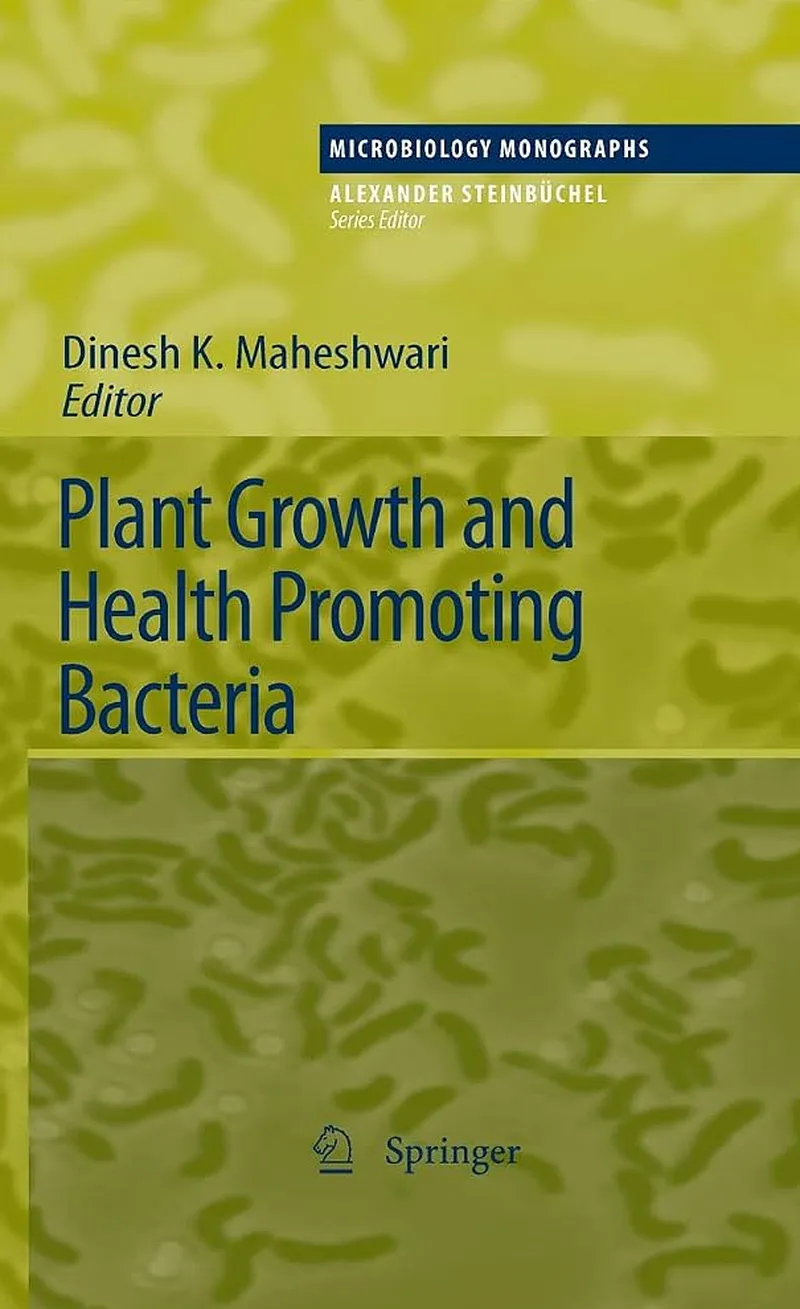

Plant Growth and Health Promoting Bacteria
Plant Growth and Health Promoting Bacteria, edited by Marta S. Dardanelli, is an academic resource focused on the important role of beneficial bacteria in plant growth, crop health, biological control, and sustainable agriculture. Published by Springer, the book brings together research covering plant growth-promoting rhizobacteria (PGPR), rhizobia, endophytic bacteria, biofilms, microbial biocontrol, and beneficial agricultural microorganisms.
The book explores how bacteria associated with plants can contribute to agricultural productivity and plant health. Its chapters address both the biological foundations of plant–microbe interactions and their practical applications, including disease suppression, biological control, bioformulation, commercialization, nitrogen fixation, and sustainable low-input crop production.
About the Book
Beneficial microorganisms associated with plants have attracted considerable interest as potential tools for improving agricultural systems. Plant Growth and Health Promoting Bacteria examines the mechanisms and applications of these microorganisms, with particular attention to PGPR and related bacterial groups.
The volume combines fundamental concepts with research on agricultural applications, providing a broad perspective on how beneficial bacteria can influence plant development, nutrient acquisition, disease resistance, and crop production.
Plant Growth-Promoting Rhizobacteria and Rhizobia
A major focus of the book is the role of plant growth-promoting rhizobacteria (PGPR) and rhizobia in agriculture. These beneficial microorganisms can interact closely with plant roots and contribute to processes important for plant development and agricultural productivity.
The book covers the fundamentals of PGPR as well as their potential applications in agricultural systems, making these chapters relevant to researchers and students studying plant microbiology and agricultural biotechnology.
Biofilms and Bacterial Interactions with Plants
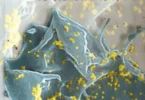
The formation of microbial biofilms is another important topic. Biofilm development can influence how plant-associated bacteria colonize their environments and perform their growth-promoting activities.
Understanding these interactions provides insight into the biological mechanisms underlying PGPR action and helps explain why bacterial communities can play an important role in plant health.
Biological Control of Plant Diseases
Several chapters examine the use of plant growth-promoting bacteria as biocontrol agents against plant diseases. The book discusses bacterial approaches for managing soilborne pathogens and explores microorganisms capable of suppressing harmful plant-associated fungi and other disease-causing organisms.
Particular attention is given to antifungal compounds produced by PGPR and their modes of action, as well as the potential of bacterial groups such as Bacillus and Paenibacillus for biological control.
PGPR and Sustainable Agriculture
An important theme throughout the book is the potential contribution of beneficial bacteria to sustainable agriculture. Biological approaches can complement conventional agricultural practices by making use of naturally occurring microbial interactions.
The book considers PGPR in sustainable and low-input crop production, including applications involving rice, legumes, pigeon pea, and other agricultural systems.
Bioformulation and Commercialization
For microbial technologies to become practical agricultural products, beneficial bacteria must be successfully developed, formulated, and applied. The book therefore addresses constraints in PGPR bioformulation and commercialization, together with strategies for improving their future agricultural use.
This provides an important connection between laboratory research and the development of microbial products for real-world agricultural applications.
Bacterial Biocontrol and Antifungal Compounds
The production of biologically active compounds by beneficial bacteria is explored as a mechanism for suppressing plant pathogens. Research on antifungal compounds produced by PGPR helps illustrate how microorganisms can directly influence pathogen populations and contribute to plant protection.
These topics are particularly relevant to researchers investigating microbial biopesticides and environmentally oriented approaches to crop disease management.
Microorganisms in Challenging Environments
The book also examines plant-associated microorganisms living under harsh tropical and other environmental conditions. Such microorganisms may provide valuable biological resources for agricultural improvement in environments where conventional approaches face limitations.
Cold-tolerant agriculturally important microorganisms are also discussed, highlighting the diversity of microbial traits that may have practical agricultural significance.
Nitrogen Fixation and Plant Nutrition
Nitrogen-related interactions form another important part of the book. Topics include endophytic diazotrophic bacteria, rhizobial symbiosis, nitrogen assimilation, and the nutritional relationships between plants and microorganisms.
The volume also addresses the regulation of nitrogen assimilation in legumes under insufficient molybdenum supply, demonstrating the complex interactions among microorganisms, nutrients, and plant metabolism.
Bacillus, Paenibacillus, and Beneficial Microorganisms
Several chapters explore agriculturally important bacterial groups, including Bacillus and Paenibacillus species, as potential PGPR for sustainable agriculture. These organisms are considered in relation to plant growth promotion and biological control.
The diversity of organisms discussed throughout the book illustrates the broad range of microbial resources being investigated for agricultural applications.
ACC Deaminase-Producing PGPR
The role of ACC deaminase-producing plant growth-promoting rhizobacteria is also addressed. These bacteria represent an important area of research into the mechanisms through which beneficial microorganisms can influence plant growth and responses to environmental conditions.
Who Should Use This Book?
Plant Growth and Health Promoting Bacteria may be particularly useful for:
- Students of plant microbiology and agricultural microbiology.
- Researchers studying plant–microbe interactions.
- Agricultural biotechnology students and researchers.
- Plant pathology and biological control researchers.
- Microbial biotechnology professionals.
- Researchers investigating PGPR and rhizobia.
- Scientists working on sustainable and low-input agriculture.
- Researchers developing microbial biofertilizers and biocontrol products.
- Students and professionals interested in beneficial agricultural microorganisms.
Final Thoughts
Plant Growth and Health Promoting Bacteria provides a broad scientific perspective on the relationship between beneficial bacteria and agricultural productivity. From PGPR and rhizobia to bacterial biofilms, biological control, nitrogen fixation, and microbial applications, the book brings together diverse research areas connected by the use of microorganisms to support plant health.
Its coverage of sustainable agriculture, disease management, microbial commercialization, and plant-associated bacteria makes it a valuable reference for readers interested in the expanding role of beneficial microorganisms in modern agricultural science.
Book Information
Title: Plant Growth and Health Promoting Bacteria
Editor: Marta S. Dardanelli
Publisher: Springer
Publication Date: July 23, 2011
Edition: Not specified in the supplied information
Language: English
ISBN-10: 3642136133
ISBN-13: 978-3642136139
ASIN: B0CYHFZPDT
Subjects: Plant Microbiology, Plant Growth-Promoting Rhizobacteria, PGPR, Rhizobia, Plant–Microbe Interactions, Biological Control, Plant Pathology, Agricultural Microbiology, Sustainable Agriculture, Microbial Biotechnology, Biofertilizers, Endophytic Bacteria, Nitrogen Fixation
Plant Growth and Health Promoting Bacteria explores the science and agricultural potential of beneficial bacteria, highlighting their roles in plant growth, disease control, nutrient interactions, and sustainable crop production.
Support the Creators!
If you enjoy this book, please consider supporting the author and publisher by purchasing a physical or digital copy. Buying official copies ensures authors can keep writing great books.