
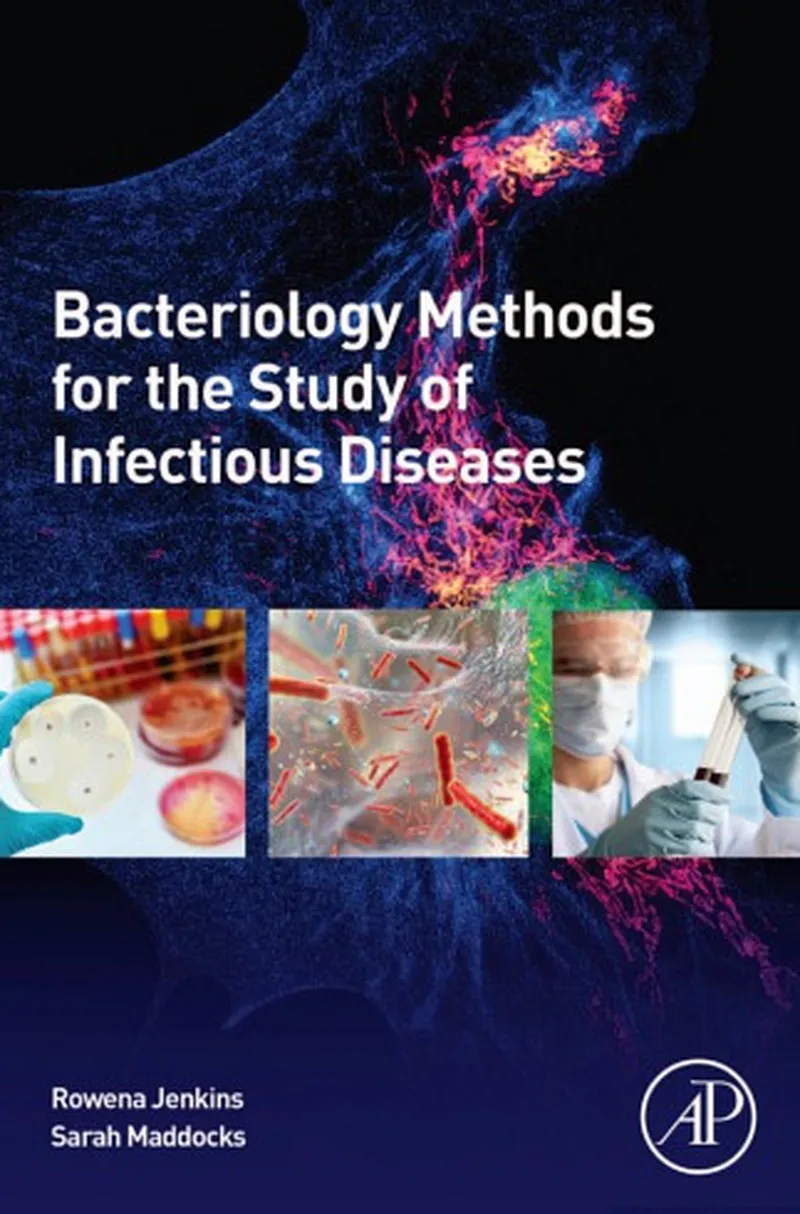

Bacteriology Methods for the Study of Infectious Diseases, 1st Edition
Bacteriology Methods for the Study of Infectious Diseases, 1st Edition is a practical microbiology resource focused on laboratory approaches used to investigate bacterial pathogens and infectious diseases. Published by Academic Press, the book provides a foundation in methods for studying, identifying, and characterizing bacteria associated with human infection.
With 230 pages, it offers a focused reference for students, laboratory scientists, microbiologists, and researchers working in clinical microbiology and infectious disease research.
About the Book
Bacteriology plays an important role in understanding infectious diseases, from identifying bacterial pathogens to investigating their biological characteristics.
The book introduces laboratory methods used to examine bacterial morphology, growth, identification, pathogenic characteristics, and interactions with their hosts.
Bacterial Isolation and Culture
Obtaining bacterial isolates is an important first step in laboratory investigation.
The book introduces fundamental techniques for specimen processing, bacterial isolation, culture, incubation, and maintenance of bacterial strains.
Microscopic Examination
Microscopy provides an initial means of examining bacterial characteristics.
The text covers approaches for evaluating bacterial morphology, cellular arrangements, and staining characteristics, helping researchers obtain preliminary information about bacterial isolates.
Bacterial Identification
Accurate identification of bacterial organisms is essential in infectious disease studies.
The book discusses methods based on phenotypic characteristics, biochemical properties, growth patterns, and other laboratory observations used to characterize bacterial isolates.
Diagnostic Bacteriology
Laboratory diagnosis helps determine the bacterial cause of an infectious disease.
The book provides an introduction to methods used in clinical bacteriology and pathogen detection, connecting laboratory findings with the investigation of infectious diseases.
Bacterial Characterization
Beyond identification, researchers often need to investigate the biological properties of bacterial isolates.
The book covers approaches for studying bacterial characteristics, virulence-associated properties, and other features relevant to infectious disease research.
Antimicrobial Testing
Understanding bacterial susceptibility to antimicrobial agents is an important part of clinical microbiology.
The text introduces laboratory principles used to evaluate bacterial responses to antimicrobial compounds and support investigations of antimicrobial susceptibility.
Molecular Approaches
Modern bacteriology increasingly combines conventional laboratory methods with molecular techniques.
The book provides a foundation for understanding the use of molecular and microbiological approaches to investigate bacterial pathogens and improve their identification and characterization.
Infectious Disease Research
Bacteriological methods are important not only for diagnosis but also for studying how bacterial infections develop.
The book connects laboratory methods with broader investigations of bacterial pathogenicity, host–microbe interactions, and infectious disease mechanisms.
Who Is This Book For?
Bacteriology Methods for the Study of Infectious Diseases can be useful for:
- Microbiology students
- Medical microbiology students
- Clinical laboratory science students
- Medical laboratory professionals
- Microbiologists
- Infectious disease researchers
- Biomedical researchers
- Laboratory technicians
It is particularly useful for readers seeking a practical introduction to bacteriological methods used in infectious disease research and clinical microbiology.
Final Thoughts
Bacteriology Methods for the Study of Infectious Diseases, 1st Edition provides a focused introduction to laboratory approaches for studying bacterial pathogens.
The book covers bacterial isolation, culture, microscopy, identification, characterization, diagnostic bacteriology, antimicrobial susceptibility, and molecular approaches, making it a useful resource for students and professionals working with infectious microorganisms.
Book Information
Title: Bacteriology Methods for the Study of Infectious Diseases
Edition: 1st Edition
Publisher: Academic Press
Publication Date: August 6, 2019
Language: English
Print Length: 230 pages
ISBN-10: 0128152222
ISBN-13: 978-0128152225
Subject: Bacteriology / Clinical Microbiology / Infectious Diseases / Laboratory Methods
Bacteriology Methods for the Study of Infectious Diseases, 1st Edition introduces important approaches for isolating, culturing, examining, identifying, and characterizing bacterial pathogens, making it a practical resource for students, microbiologists, laboratory professionals, and infectious disease researchers.
Support the Creators!
If you enjoy this book, please consider supporting the author and publisher by purchasing a physical or digital copy. Buying official copies ensures authors can keep writing great books.