
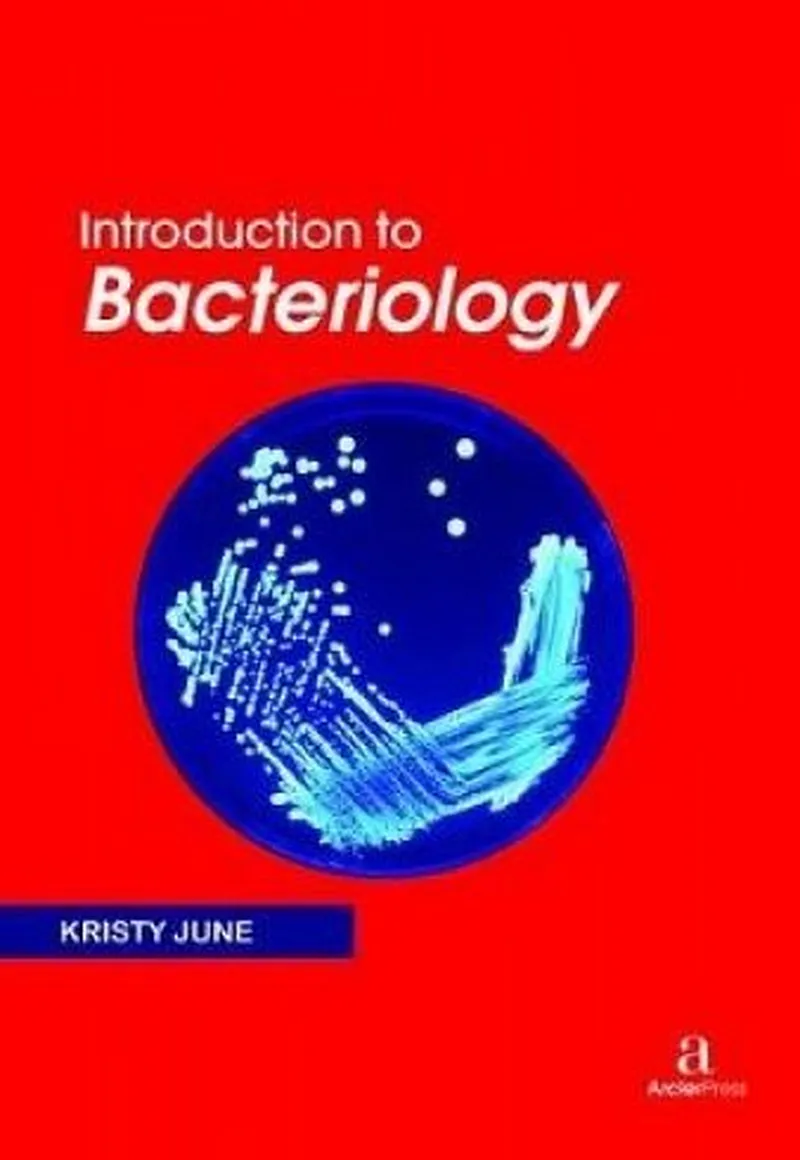

Introduction to Bacteriology
Introduction to Bacteriology by Kristy June is an introductory resource covering the fundamental principles of bacteriology and the biology of bacteria. Published by Arcler Education Inc, the book provides a foundation for understanding bacterial structure, classification, growth, reproduction, genetics, and their relationships with humans and the environment.
It is suitable for students beginning their studies in bacteriology, microbiology, biology, and related life sciences.
About the Book
Bacteriology is the branch of microbiology concerned with the study of bacteria. Understanding bacterial biology is essential for studying infectious diseases, biotechnology, environmental microbiology, and many other areas of the biological sciences.
The book introduces the basic concepts needed to understand bacterial structure, physiology, classification, reproduction, and biological significance.
Bacterial Structure
The structure of a bacterial cell is closely related to its biological functions.
The book introduces major bacterial components, including the cell membrane, cell wall, cytoplasm, ribosomes, nucleoid, capsules, flagella, and other cellular structures.
Bacterial Classification
Bacteria represent a highly diverse group of microorganisms.
The text introduces fundamental approaches to bacterial classification and identification, helping readers understand how bacterial organisms can be distinguished based on their characteristics.
Bacterial Growth and Reproduction
Bacteria can reproduce rapidly when environmental conditions are favorable.
The book discusses bacterial growth, reproduction, growth requirements, and environmental factors that influence bacterial populations.
Bacterial Metabolism
Bacteria use diverse metabolic strategies to obtain energy and nutrients.
The book introduces basic concepts of bacterial metabolism, nutrition, respiration, fermentation, and energy production.
Bacterial Genetics
Bacterial genetics provides important insights into heredity and microbial adaptation.
The resource introduces bacterial DNA, genes, mutations, genetic variation, and mechanisms of genetic exchange, providing a foundation for understanding microbial evolution.
Bacteria and Human Health
Many bacteria are harmless or beneficial, while others can cause infectious diseases.
The book examines the relationship between bacteria and humans, including concepts related to pathogenic bacteria, infection, disease, and beneficial microorganisms.
Bacterial Identification
Identifying bacterial species is important in both research and clinical microbiology.
The book introduces basic identification principles involving microscopy, staining, culture characteristics, biochemical properties, and other laboratory observations.
Bacteria in the Environment
Bacteria play essential roles in natural ecosystems.
The text introduces their contributions to decomposition, nutrient cycling, soil processes, and interactions with other organisms.
Applications of Bacteriology
Bacterial research has applications across numerous scientific and industrial fields.
The book provides context for the use of bacteria in medicine, biotechnology, agriculture, food production, environmental science, and industrial processes.
Who Is This Book For?
Introduction to Bacteriology can be useful for:
- Biology students
- Microbiology students
- Bacteriology students
- Medical laboratory students
- Biotechnology students
- Health science students
- Agricultural science students
- Life science students
It is particularly appropriate for readers seeking a basic introduction to bacterial biology and the principles of bacteriology.
Final Thoughts
Introduction to Bacteriology provides a foundation for understanding the biology and importance of bacteria.
By covering bacterial structure, classification, growth, metabolism, genetics, identification, human health, environmental roles, and applications, the book helps students establish the basic knowledge required for further study in microbiology and related disciplines.
Book Information
Title: Introduction to Bacteriology
Author: Kristy June
Publisher: Arcler Education Inc
Language: English
ISBN-10: 1680945270
ISBN-13: 978-1680945270
Subject: Bacteriology / Microbiology / Bacterial Biology / Life Sciences
Introduction to Bacteriology introduces the essential principles of bacterial structure, classification, growth, metabolism, genetics, identification, pathogenicity, environmental roles, and applications, making it a useful starting resource for students studying bacteriology and microbiology.
Support the Creators!
If you enjoy this book, please consider supporting the author and publisher by purchasing a physical or digital copy. Buying official copies ensures authors can keep writing great books.