
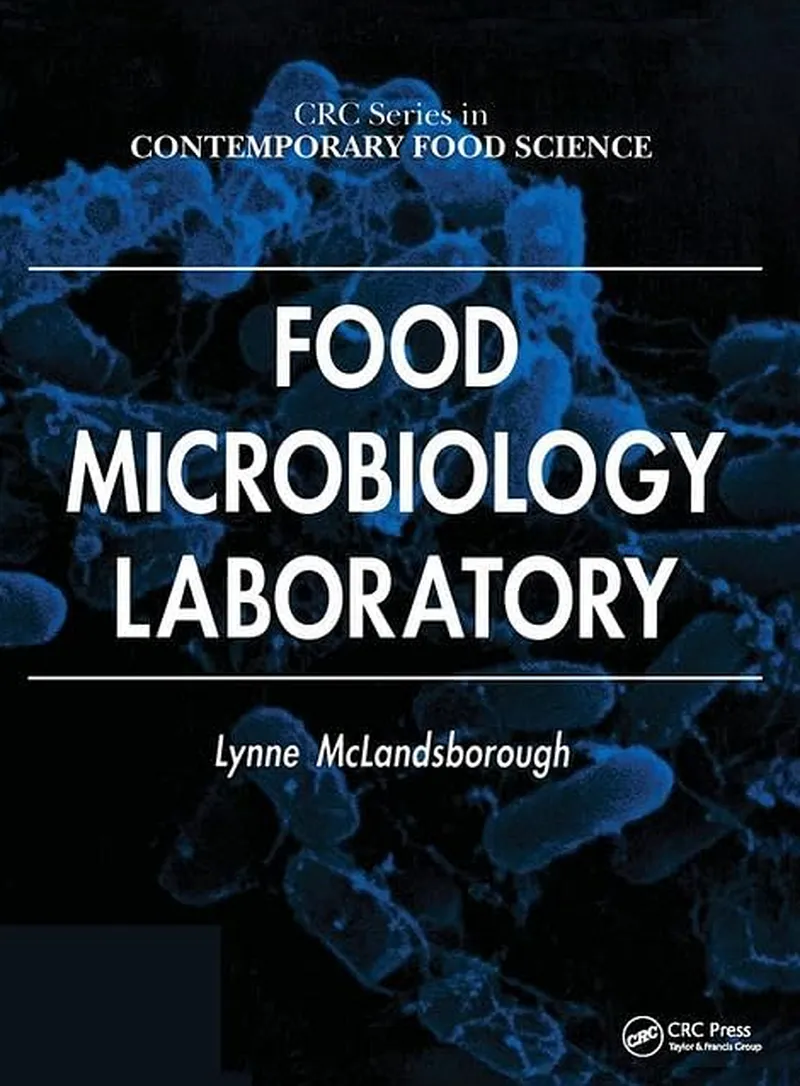

Food Microbiology Laboratory (Contemporary Food Science)
Food Microbiology Laboratory is a practical laboratory manual designed to give students hands-on experience with the methods used to investigate microorganisms in food. Developed for an introductory, one-semester food microbiology course, the book presents 18 well-tested laboratory experiments covering both traditional microbiological techniques and rapid methods commonly used in the food industry.
The manual is based on laboratory exercises developed for food science and microbiology courses at the University of Massachusetts. Its structured experiments provide students with practical experience in detecting and enumerating microorganisms in food samples while introducing important concepts in food safety, pathogen detection, microbial destruction, and molecular testing.
About the Book
Laboratory experience is an important component of learning food microbiology. Food Microbiology Laboratory bridges the gap between theoretical knowledge and practical laboratory work by providing detailed, step-by-step exercises that students can perform as part of a semester-long course.
The experiments cover established approaches for the enumeration and detection of microorganisms in food, while also introducing rapid methods used in industry. The manual can therefore help students become familiar with both conventional food microbiology techniques and newer approaches to microbial detection.
Key Features
- 18 practical laboratory experiments
- Designed for an introductory one-semester food microbiology course
- Hands-on investigation of microorganisms in food samples
- Traditional methods for microbial enumeration
- Rapid microbiological methods used in the food industry
- Detection of important foodborne microorganisms
- Experiments involving E. coli, Staphylococcus, and Salmonella
- Investigation of the thermal destruction of microorganisms
- Use of PCR to confirm Listeria monocytogenes
- Laboratory exercises based on established methods
- Procedures and dilutions optimized for the individual exercises
- Adaptable format that can be supplemented with commercial test kits
Foodborne Pathogen Detection
A significant component of the manual is the detection of microorganisms that are important to food safety. Students gain practical experience with methods for investigating organisms such as E. coli, Staphylococcus, and Salmonella, providing an introduction to laboratory approaches used to identify potential foodborne hazards.
The manual also introduces molecular testing through the use of PCR for confirmation of Listeria monocytogenes, helping students see how molecular methods can complement traditional microbiological techniques.
Traditional and Rapid Methods
The experiments expose students to both conventional microbiological procedures and rapid methods used in professional food microbiology laboratories. This combination provides a useful foundation for understanding how microorganisms can be detected and quantified using different analytical approaches.
The exercises are based on established laboratory methods, including methods published in the FDA Bacteriological Analytical Manual, giving the manual a strong connection to established food microbiology laboratory practice.
Thermal Destruction of Microorganisms
The book also addresses the thermal destruction of microorganisms, an important concept in food processing and food safety. Through practical experimentation, students can examine how heat affects microbial survival and connect laboratory observations with principles relevant to food preservation and processing.
Who Should Use This Manual?
Food Microbiology Laboratory is particularly useful for:
- Food science students
- Food microbiology students
- Microbiology students
- Laboratory science students
- Instructors teaching introductory food microbiology
- Students learning foodborne pathogen detection
- Readers seeking practical experience with food microbiology methods
An instructor’s manual is also available for qualifying course adoptions to assist with laboratory planning, material ordering, and preparation.
Final Thoughts
Food Microbiology Laboratory provides a focused and practical foundation for students learning food microbiology through laboratory experience. Its 18 experiments cover microbial enumeration, pathogen detection, thermal destruction, rapid testing, and PCR-based confirmation, giving students exposure to a range of approaches used in food microbiology.
Published in 2017, the manual reflects the laboratory methods and educational practices available at that time. It can serve as a useful course laboratory resource while current laboratory standards, validated methods, and regulatory guidance should be consulted for contemporary professional testing.
Book Information
Title: Food Microbiology Laboratory
Series: Contemporary Food Science
Publisher: CRC Press
Publication Date: August 2, 2017
Edition: 1st Edition
Language: English
Print Length: 196 pages
ISBN-10: 1138426571
ISBN-13: 978-1138426573
Subjects: Food Microbiology, Food Science, Food Safety, Laboratory Methods, Foodborne Pathogens, Microbial Enumeration, PCR, Salmonella, E. coli, Listeria monocytogenes
Support the Creators!
If you enjoy this book, please consider supporting the author and publisher by purchasing a physical or digital copy. Buying official copies ensures authors can keep writing great books.