
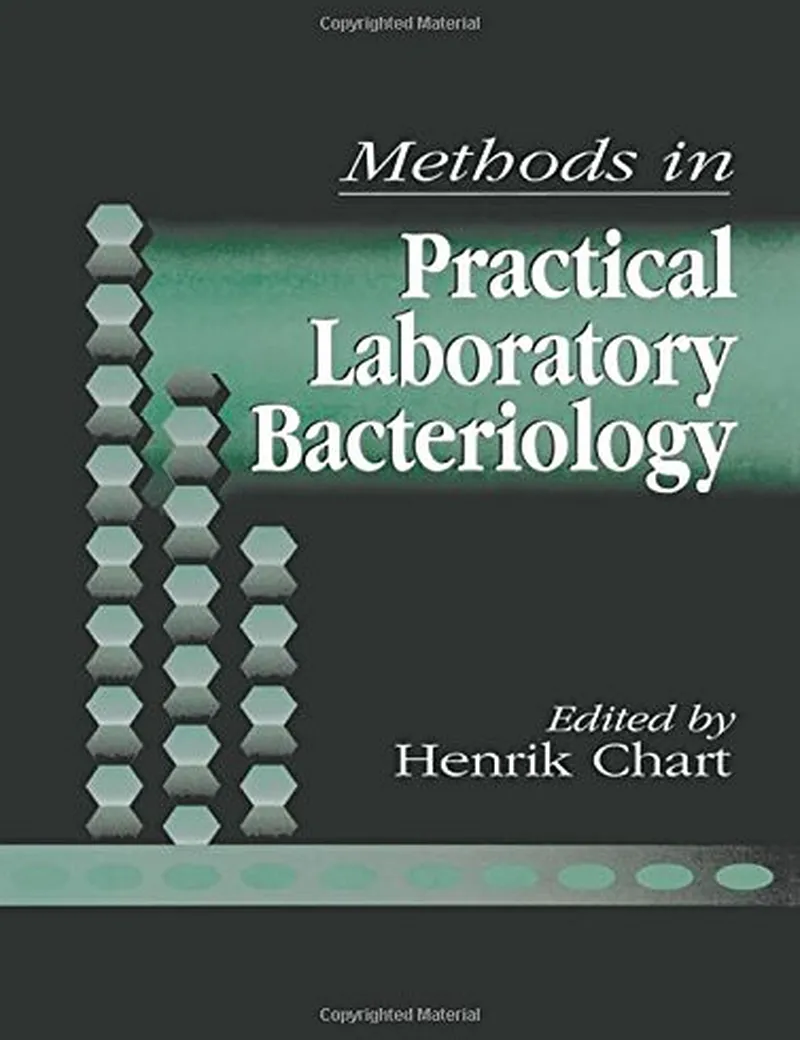

Methods in Practical Laboratory Bacteriology
Methods in Practical Laboratory Bacteriology by Henrik Chart is a practical laboratory reference focused on the technical knowledge and experimental methods needed to obtain consistent and reliable results in bacteriology research. The book addresses an often-overlooked aspect of laboratory science: the practical techniques and “tricks of the trade” that can make a significant difference in the quality and reproducibility of experimental data.
Published by CRC Press, this first edition provides a focused collection of methods covering bacterial fractionation, membrane characterization, bacterial macromolecules, antibiotic resistance, molecular techniques, and electrophoretic analysis.
About the Book
Successful laboratory experiments depend not only on theoretical knowledge but also on the ability to perform techniques accurately and consistently. Practical details that are important at the laboratory bench are not always described fully in scientific publications.
Methods in Practical Laboratory Bacteriology addresses this gap by bringing together detailed technical information and laboratory approaches relevant to experimental bacteriology. The book is particularly useful for readers who need practical guidance alongside their theoretical understanding of bacterial biology and laboratory methods.
Key Laboratory Techniques
The book covers a range of important bacteriological and molecular laboratory methods, including:
- Bacterial fractionation
- Membrane characterization
- Analysis of lipopolysaccharides (LPS)
- SDS-PAGE techniques
- Immunoblotting
- ELISA methods
- Detection and quantification of antibiotic resistance
- Analysis of bacterial chromosomes using pulsed-field gel electrophoresis (PFGE)
- Extraction and analysis of fingerprinting plasmids
- Use of non-radioactive gene probes
- Ribosomal RNA gene probes
- Molecular approaches for investigating bacterial characteristics
Practical Approach to Experimental Bacteriology
A major strength of the book is its focus on the practical side of laboratory bacteriology. Reliable experimental results often depend on details of sample preparation, laboratory technique, and method selection that may not receive extensive attention in conventional textbooks.
By bringing these methods together in one reference, the book can help students and laboratory researchers understand how experimental procedures are applied in bacteriological investigations and how technical consistency contributes to dependable data.
Applications in Bacterial Research
The methods discussed cover several areas of experimental microbiology. Techniques for bacterial fractionation and membrane characterization can be used to investigate bacterial structures, while lipopolysaccharide analysis provides approaches for studying important components of bacterial envelopes.
Electrophoretic methods such as SDS-PAGE and PFGE, together with immunoblotting, ELISA, gene probes, and plasmid fingerprinting, provide a range of approaches for examining bacterial proteins, chromosomes, plasmids, and genetic characteristics.
The inclusion of antibiotic-resistance methods also connects practical laboratory bacteriology with an important area of microbiological research and clinical relevance.
Who Should Read This Book?
Methods in Practical Laboratory Bacteriology is particularly relevant to:
- Microbiology students
- Bacteriology students
- Laboratory scientists
- Microbiology researchers
- Molecular biology researchers
- Biomedical science students and researchers
- Laboratory technicians working with bacterial cultures and molecular methods
- Readers seeking practical laboratory methods in experimental bacteriology
Historical Context
This first edition was published in 1994, so some laboratory methods, equipment, terminology, and molecular techniques described in the book reflect the practices and technologies available at that time. It is therefore best used as a foundational or historical practical reference, with modern protocols and current laboratory standards consulted for contemporary experimental work.
Final Thoughts
Methods in Practical Laboratory Bacteriology provides a focused collection of practical techniques designed to address the hands-on requirements of experimental bacteriology. Its coverage of bacterial fractionation, membrane analysis, lipopolysaccharides, electrophoresis, immunological methods, antibiotic resistance, plasmid fingerprinting, and gene probes makes it a useful reference for understanding the laboratory approaches used in bacterial research.
Book Information
Title: Methods in Practical Laboratory Bacteriology
Author: Henrik Chart
Publisher: CRC Press
Publication Date: October 10, 1994
Edition: 1st Edition
Language: English
Print Length: 166 pages
ISBN-10: 9780849386923
ISBN-13: 978-0849386923
ASIN: 0849386926
Subjects: Laboratory Bacteriology, Microbiology, Bacterial Fractionation, Lipopolysaccharides, SDS-PAGE, Immunoblotting, ELISA, Antibiotic Resistance, PFGE, Plasmids, Gene Probes
Support the Creators!
If you enjoy this book, please consider supporting the author and publisher by purchasing a physical or digital copy. Buying official copies ensures authors can keep writing great books.