
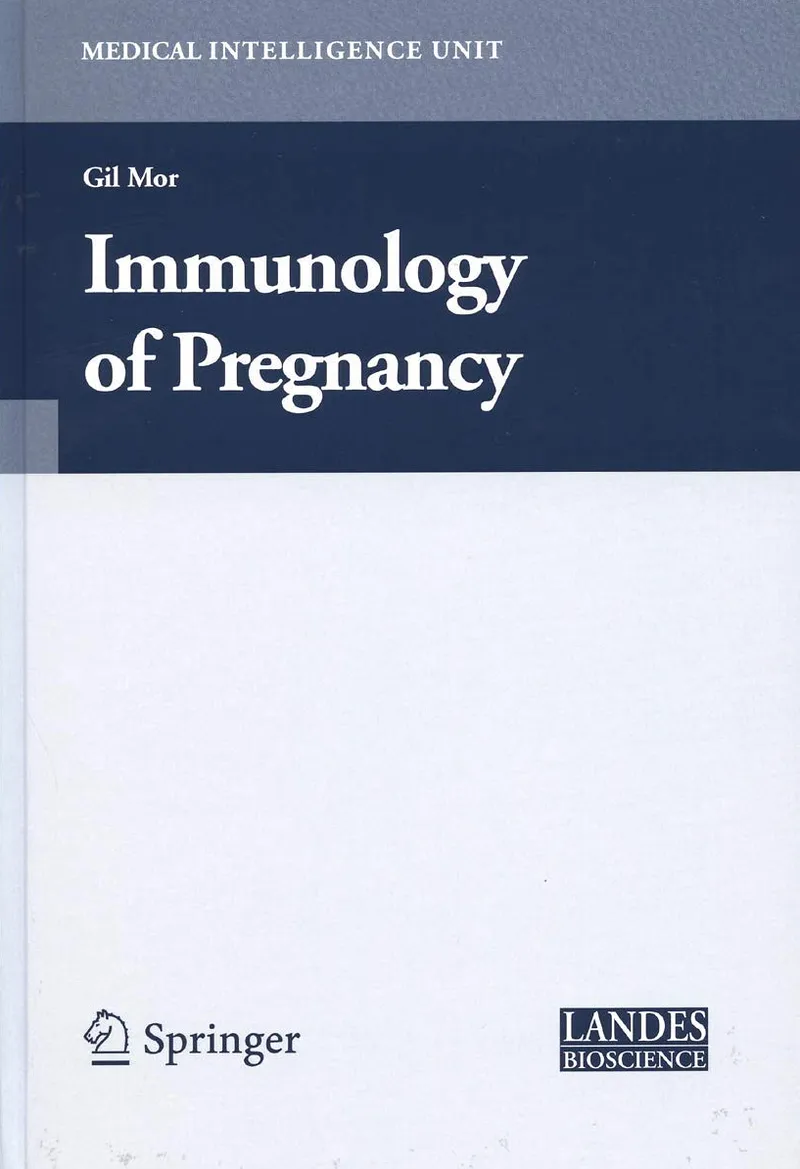

Immunology of Pregnancy (Medical Intelligence Unit)
Immunology of Pregnancy provides a focused examination of the role of the immune system during pregnancy and the complex interactions between the maternal immune system and the developing placenta. As reproductive immunology continues to grow at the intersection of immunology and reproductive sciences, understanding these interactions has become increasingly important for studying normal pregnancy as well as pregnancy-related complications.
Published by Springer as part of the Medical Intelligence Unit, this volume reviews research and hypotheses concerning reproductive immunology, with particular attention to the immunology of implantation and the mechanisms connecting maternal immune responses with pregnancy outcomes.
About the Book
Reproductive Immunology
Reproductive immunology brings together concepts from immunology and reproductive science to explain how the immune system functions during pregnancy. The book provides a comprehensive review of knowledge concerning immune processes associated with pregnancy and their relevance to reproductive health.
Maternal Immune System and the Placenta
One of the central themes is the interaction between the placenta and the maternal immune system. These interactions are important for understanding the biological processes that allow pregnancy to develop and provide a framework for investigating abnormal immune responses associated with pregnancy complications.
Immunology of Implantation
The volume examines different hypotheses and studies related to the immunology of implantation. Understanding the immune events surrounding implantation provides important insight into the early stages of pregnancy and the relationship between reproductive tissues and maternal immune mechanisms.
Pregnancy Complications
A major strength of the book is its connection between basic reproductive immunology research and clinically relevant pregnancy complications. The material discusses how immunological mechanisms may contribute to conditions such as preeclampsia, pre-term labor, and intrauterine growth restriction (IUGR).
Preeclampsia
Preeclampsia is among the pregnancy complications considered in the context of reproductive immunology. Examining maternal immune interactions provides researchers with additional perspectives for investigating the biological processes associated with this condition.
Pre-Term Labor
The book also addresses the relevance of immunological research to pre-term labor, illustrating how findings from basic reproductive immunology may help researchers investigate the mechanisms associated with premature birth.
Intrauterine Growth Restriction
Intrauterine growth restriction (IUGR) represents another important application of reproductive immunology research discussed in the volume. The book connects immunological concepts with research into complications affecting fetal growth and pregnancy outcomes.
From Basic Research to Clinical Applications
Beyond reviewing fundamental concepts, Immunology of Pregnancy emphasizes the practical application of reproductive immunology research. This approach helps connect laboratory findings and immunological hypotheses with the study of clinically significant pregnancy complications.
Who Should Use This Book?
Immunology of Pregnancy may be particularly useful for:
- Reproductive immunologists
- Immunologists
- Obstetricians and gynecologists
- Reproductive medicine specialists
- Maternal-fetal medicine researchers
- Placental biology researchers
- Reproductive scientists
- Biomedical researchers
- Graduate and postgraduate students
- Researchers studying pregnancy complications
- Medical professionals interested in reproductive immunology
Final Thoughts
Immunology of Pregnancy provides a specialized overview of the immune processes involved in pregnancy and the interactions between maternal immunity and the placenta. Its emphasis on implantation and pregnancy complications makes it especially relevant to researchers seeking to connect fundamental reproductive immunology with clinically important pregnancy outcomes.
Although published in 2007 and reflecting the scientific knowledge available at that time, the book offers a useful reference for understanding the development of reproductive immunology as a field and its application to the study of preeclampsia, pre-term labor, and IUGR.
Book Information
Title: Immunology of Pregnancy (Medical Intelligence Unit)
Publisher: Springer
Publication Date: December 27, 2007
Edition: 2006th
Language: English
Print Length: 339 pages
ASIN: B000WNGCDO
ISBN-13: 978-0387349442
Series: Medical Intelligence Unit
Subjects: Reproductive Immunology, Immunology of Pregnancy, Pregnancy, Maternal Immunology, Placental Immunology, Placenta, Implantation, Reproductive Sciences, Maternal-Fetal Medicine, Preeclampsia, Pre-Term Labor, Intrauterine Growth Restriction, IUGR, Pregnancy Complications, Reproductive Medicine, Immunological Research
Immunology of Pregnancy examines maternal immune responses, placental interactions, implantation, and the potential role of reproductive immunology in understanding major pregnancy complications.
Support the Creators!
If you enjoy this book, please consider supporting the author and publisher by purchasing a physical or digital copy. Buying official copies ensures authors can keep writing great books.