
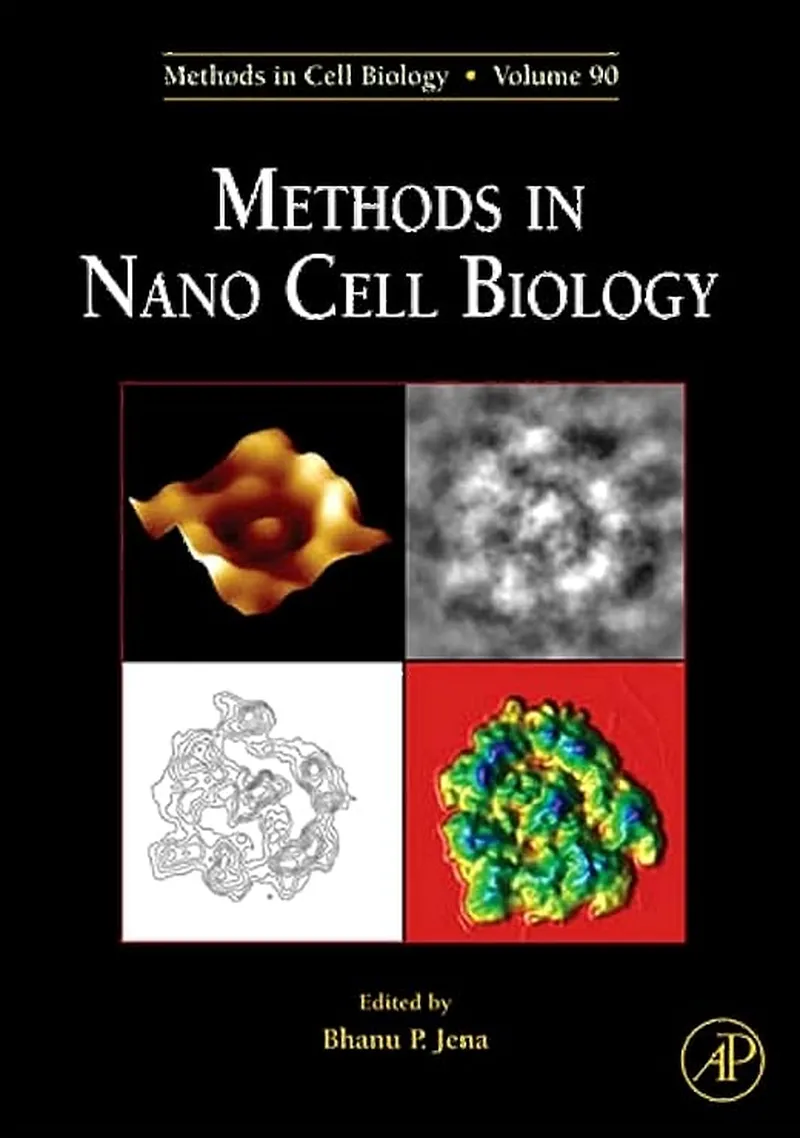

Methods in Nano Cell Biology (Volume 90)
Methods in Nano Cell Biology (Volume 90) explores the emerging field of nanobiology and its applications to understanding living cells at the nanometer and single-molecule levels. As biology increasingly moves toward investigating cellular processes with greater precision, nanotechnology provides new tools for examining the structure, function, and metabolic behavior of cells.
Published by Academic Press, this volume brings together methodological approaches, instrumentation, protocols, and emerging technologies relevant to nano cell biology. It provides both historical context and practical information, making it a useful resource for researchers interested in the intersection of nanoscience, cell biology, molecular biology, and biomedical research.
About the Book
Nanobiology and Nano Cell Biology
Nanobiology investigates biological structures and processes at extremely small scales, including individual molecules and complex molecular assemblies. The book examines how concepts from nanoscience can be applied to the study of living cells and their molecular organization.
Studying Cells at the Single-Molecule Level
Understanding the behavior of living cells at the single-molecule level represents a major challenge in modern biology and medicine. Nano cell biology provides approaches for observing and investigating biological structures and processes that may not be adequately characterized using conventional techniques.
Nanostructures and Biomolecular Assemblies
The volume discusses complex assemblies of biomolecules in combination with distinctive nanoscience structures and materials. Examples include biochips, molecular motors, surfaces, rods, dots, and other nanoscale materials, illustrating the diverse ways nanotechnology can interact with biological systems.
Structure, Function, and Cellular Metabolism
Nano Cell Biology applies nanoscale approaches to important questions concerning the structure and function of cells. The methods described can also contribute to investigations of cellular metabolic processes, helping researchers examine biological activity at increasingly detailed scales.
Historical Development of the Field
Because nano cell biology is an emerging area of research, the book provides historical background on its development. This context helps readers understand how advances in nanoscience and biological instrumentation have contributed to the growth of the field.
New Instrumentation and Research Applications
Modern instrumentation has expanded the ability of researchers to investigate biological systems at nanometer resolution. The book covers applications of new instrumentation and methodological developments that support the study of cellular structures and processes at very small scales.
Detailed Experimental Protocols
A practical feature of the volume is its inclusion of detailed protocols for studying live cells at the nanometer level. These methodological resources can help researchers understand experimental approaches used in nano cell biology and related areas of nanobiological research.
Future Technologies
The book also looks toward future developments in nanotechnology and their potential applications to living cells. Emerging technologies may provide increasingly sophisticated ways to investigate cellular organization, molecular interactions, and biological processes.
Who Should Use This Book?
Methods in Nano Cell Biology (Volume 90) may be particularly useful for:
- Cell biologists
- Molecular biologists
- Nanobiology researchers
- Nanotechnology researchers
- Biomedical scientists
- Biophysicists
- Bioengineers
- Biotechnology researchers
- Researchers working with nanoscale instrumentation
- Graduate and postgraduate students
- Scientists studying single-molecule biology
- Researchers interested in emerging cellular imaging and analytical technologies
Final Thoughts
Methods in Nano Cell Biology (Volume 90) provides a focused introduction to the methods and technologies being developed at the intersection of nanoscience and cell biology. Its combination of historical background, instrumentation, experimental protocols, and future technological perspectives makes it valuable for understanding how nanoscale approaches can be applied to living cells.
For researchers and advanced students exploring nanobiology, single-molecule research, cellular structure, molecular assemblies, and nanoscale biological techniques, this volume offers a practical and forward-looking resource.
Book Information
Title: Methods in Nano Cell Biology (Volume 90)
Publisher: Academic Press
Publication Date: December 25, 2008
Edition: 1st
Language: English
Print Length: 504 pages
ASIN: 1597492701
ISBN-10: 9781597492706
ISBN-13: 978-1597492706
Subjects: Nano Cell Biology, Nanobiology, Nanotechnology, Cell Biology, Molecular Biology, Single-Molecule Biology, Biomolecular Assemblies, Biochips, Molecular Motors, Cellular Structure, Cellular Function, Cellular Metabolism, Nanoscale Research, Nanometer Imaging, Biological Instrumentation, Experimental Protocols, Biomedical Research, Biophysics
Methods in Nano Cell Biology (Volume 90) explores nanoscale approaches, instrumentation, and experimental methods for studying the structure, function, and metabolic processes of living cells at the single-molecule and nanometer levels.
Support the Creators!
If you enjoy this book, please consider supporting the author and publisher by purchasing a physical or digital copy. Buying official copies ensures authors can keep writing great books.