
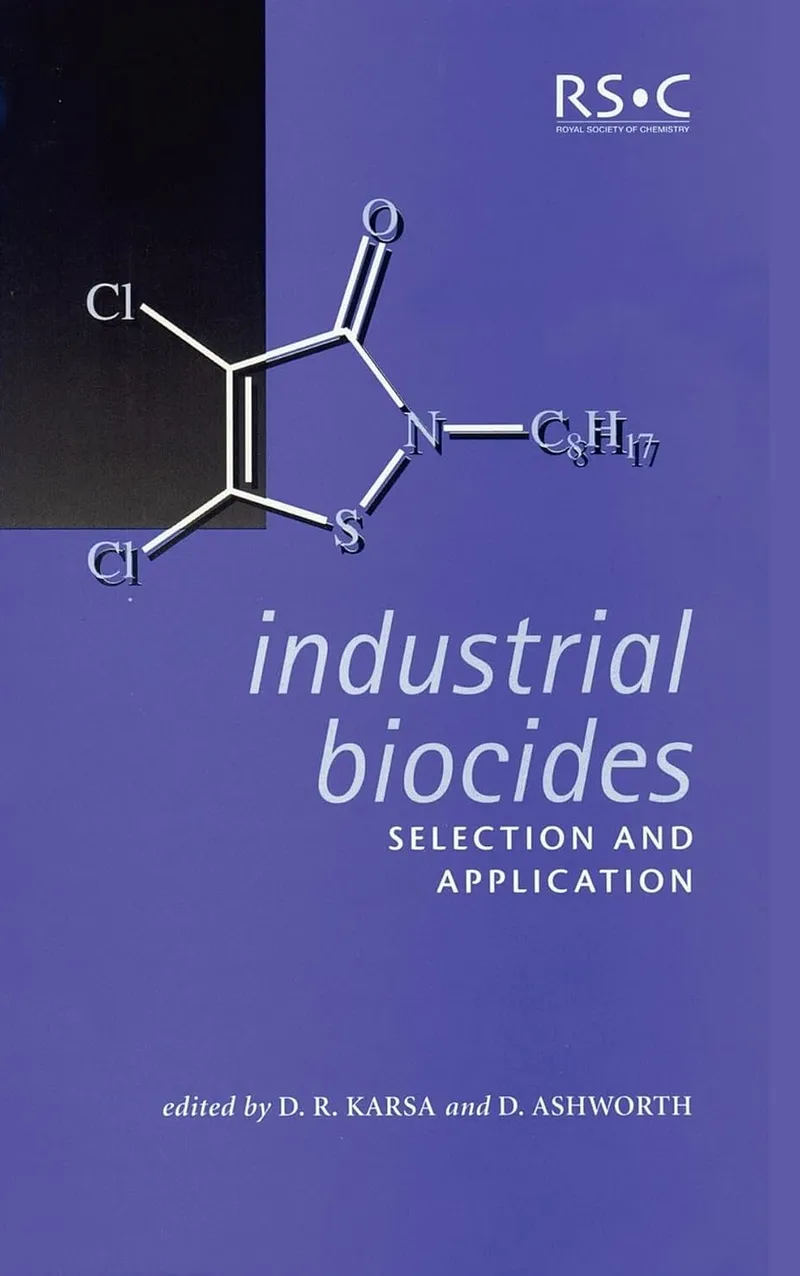

Industrial Biocides: Selection and Application
Industrial Biocides: Selection and Application is a practical reference published by the Royal Society of Chemistry that examines the diverse uses of biocides and the principles involved in selecting an appropriate product for a particular application. The book addresses the practical challenges of choosing a biocide that is genuinely fit for purpose, while also considering developments in the industry and the broader market and regulatory environment.
Biocides have applications across a remarkably wide range of industries, from pharmaceutical products and industrial processes to water treatment and consumer products such as cat litter. This book brings together information on traditional approaches, emerging ideas, and innovative developments to provide a broad perspective on industrial biocide use.
Written with contributions from acknowledged experts, the book is particularly relevant to professionals working with industrial chemicals, microbiological control, water systems, manufacturing processes, and environmental management. It also considers the biocides market, political outlook, and future trends, making it useful for readers interested in both practical application and the wider development of the field.
About the Book
Effective microbial control is important in many industrial environments where microorganisms can affect product quality, equipment performance, material integrity, water systems, or environmental conditions. Selecting a suitable biocide therefore requires more than simply choosing a chemical with antimicrobial properties.
Industrial Biocides: Selection and Application provides a guide to the use of biocides across a variety of applications and emphasizes the importance of matching the biocide to the specific requirements of the intended use.
Understanding Industrial Biocides
The book introduces the broad role of biocides in industrial and commercial settings. Rather than limiting the discussion to a single application, it examines the wide range of situations in which biocidal products can be used.
This broad perspective helps readers appreciate the different requirements that influence antimicrobial control in industrial environments.
Biocide Selection: Choosing the Right Product
One of the central purposes of the book is helping readers select a biocide that is “fit for purpose.” Different applications can require different approaches to microbial control, making appropriate selection an important part of industrial practice.
Factors associated with the intended application, operating environment, and desired level of control need to be considered when evaluating potential biocidal solutions. The book provides a framework for approaching these selection challenges from a practical perspective.
Applications Across Industry
Biocides have found uses in diverse fields, and the book provides a cross-section of their applications. Examples extend from ethical pharmaceuticals to consumer products such as cat litter, illustrating the breadth of the industrial biocides market.
This range of applications makes the book useful for professionals who encounter microbial control requirements in different manufacturing and operational environments.
Traditional and Innovative Approaches
The book considers both established biocidal practices and newer approaches to microbial control. By bringing traditional measures together with novel ideas and innovative developments, it provides readers with a broader understanding of how the field has evolved.
This combination is particularly useful for professionals who need to understand established methods while keeping track of emerging technologies and changing industrial practices.
Water Chemistry and Microbiological Control
Water systems represent an important area in which microbial control can be required. The book’s coverage is therefore relevant to industrial and water chemists as well as microbiologists and professionals responsible for managing industrial environments.
Understanding the relationship between water chemistry, microbial growth, and biocide application can help professionals approach microbial-control challenges more systematically.
Biocides, Industry, and Environmental Management
The selection and use of biocides can involve considerations that extend beyond immediate antimicrobial performance. Industrial users may also need to consider environmental management and the broader implications of biocide use.
The book’s relevance to plant and environment managers reflects this wider perspective, connecting practical biocide selection with industrial and environmental responsibilities.
The Biocides Market and Future Trends
In addition to technical applications, Industrial Biocides: Selection and Application addresses the biocides market, political outlook, and future trends.
This broader coverage provides readers with insight into the factors that can influence the development and adoption of biocidal technologies, helping place technical decisions within the wider context of the industry.
Who Should Use This Book?
- Industrial chemists involved in microbial control and chemical selection.
- Water chemists working with water treatment and industrial water systems.
- Microbiologists involved in industrial and applied microbiology.
- Plant managers responsible for industrial processes and microbial control.
- Environmental managers dealing with biocide use and environmental considerations.
- Industrial professionals evaluating biocidal products for specific applications.
- Researchers and technical specialists interested in industrial antimicrobial technologies.
- Students and professionals studying applied microbiology, industrial chemistry, or related fields.
Final Thoughts
Industrial Biocides: Selection and Application provides a focused introduction to the practical use and selection of biocides across a wide range of industrial applications. Its emphasis on choosing products that are appropriate for their intended purpose makes it particularly useful for professionals who need to make informed decisions about microbial control.
By combining technical applications with discussion of traditional practices, innovative developments, the biocides market, political considerations, and future trends, the book offers a broad perspective on industrial biocide use. It remains a useful reference for professionals working at the intersection of industrial chemistry, microbiology, water management, and environmental practice.
Book Information
Title: Industrial Biocides: Selection and Application
Publisher: Royal Society of Chemistry
Publication Date: September 10, 2002
Edition: 1st Edition
Language: English
Print Length: 176 pages
ISBN-10: 0854048057
ISBN-13: 978-0854048052
Subjects: Industrial Biocides, Biocide Selection, Industrial Microbiology, Antimicrobial Control, Water Chemistry, Industrial Chemistry, Environmental Management, Biocides Applications, Microbial Control
Industrial Biocides: Selection and Application is a practical reference on selecting and applying biocides across diverse industrial settings, with coverage of established methods, emerging developments, market trends, and environmental considerations.
Support the Creators!
If you enjoy this book, please consider supporting the author and publisher by purchasing a physical or digital copy. Buying official copies ensures authors can keep writing great books.