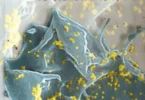



Structure and Physics of Viruses: An Integrated Guide, 2nd Edition
Structure and Physics of Viruses: An Integrated Guide, 2nd Edition is a comprehensive and extensively updated resource on the structural, dynamic, and physical properties of viruses. Published by Springer, this second edition brings together fundamental virology with concepts from physics, chemistry, biology, and biophysics to provide an integrated view of viral particles throughout their infectious life cycle.
The book follows viruses from their emergence through self-assembly from components produced inside infected cells, through their extracellular existence, to the recognition and infection of a new host cell. It examines how the physical integrity, structure, and dynamics of viral particles influence their ability to initiate infection and ultimately continue the viral life cycle.
This edition incorporates major advances from the last decade, including developments in high-resolution electron cryomicroscopy, electron cryotomography, soft X-ray tomography, high-speed atomic force microscopy, antiviral drugs, vaccines, and the use of viral particles in nanomedicine and nanotechnology. New chapters also address viruses inside infected cells and technological applications of modified viral particles.
About the Book
Viruses are biological entities whose behavior is strongly influenced by their physical structure and molecular organization. Understanding how viral particles assemble, move, interact with host cells, and maintain or lose their structural integrity requires knowledge that extends beyond traditional molecular virology.
Structure and Physics of Viruses, 2nd Edition approaches these questions from an interdisciplinary perspective. It combines established concepts with recent research to explain the structural organization, physical properties, dynamics, and mechanisms of viral particles.
The result is a resource that can serve both as an introduction for students and as an up-to-date reference for researchers working in structural and physical virology.
Viral Structure and Organization
The textbook examines the architecture of viral particles and the relationship between their molecular components and overall physical properties.
Understanding viral structure is essential for explaining how particles assemble, remain stable outside host cells, recognize susceptible cells, and undergo the structural changes associated with infection.
Viral Self-Assembly and Dynamics
Viral particles are assembled from components produced within infected cells. The book explores the physical principles underlying this self-assembly process and considers how viral components organize themselves into functional particles.
The discussion extends beyond assembly to viral dynamics, following particles through their extracellular stage and examining the physical processes involved in interaction with new host cells.
Physics of Viral Infection
The physical properties of viruses influence important stages of infection, including host-cell recognition, entry, structural rearrangement, and the eventual loss or modification of particle integrity.
By integrating physical and biological perspectives, the book helps readers understand viral infection as a process governed not only by molecular interactions but also by the physical behavior of complex biological particles.
Viruses Inside Infected Cells
The second edition introduces new material addressing the study of viruses within infected cells. This provides an important extension of structural virology, allowing researchers to investigate viral particles and structures in their cellular environment rather than examining isolated particles alone.
Modern imaging approaches make it increasingly possible to study viral organization and behavior at different scales within infected cells.
Advanced Techniques in Structural and Physical Virology
A major strength of the second edition is its coverage of modern biophysical and imaging techniques used to investigate viruses. These include:
- High-resolution electron cryomicroscopy
- Electron cryotomography
- Soft X-ray tomography
- High-speed atomic force microscopy
- Other biophysical approaches for studying viral structure and dynamics
These techniques provide complementary ways of examining viral particles, their components, and their behavior during different stages of the viral life cycle.
Antiviral Drugs and Vaccines
Advances in understanding viral structure and physical mechanisms have implications for antiviral research and vaccine development. The book discusses developments in antiviral drugs and vaccines in the context of modern structural and physical virology.
Structural information can provide valuable insight into viral components and interactions that are relevant to therapeutic and preventive strategies.
Viral Particles in Nanomedicine and Nanotechnology
Modified viral particles are increasingly being investigated for applications beyond their natural biological roles. The second edition includes material on technological applications of viral particles and their potential roles in nanomedicine and nanotechnology.
These applications demonstrate how knowledge of viral architecture and self-assembly can be used to explore engineered biological particles and new technological approaches.
An Integrated Interdisciplinary Approach
The book is designed for readers from several scientific backgrounds. Its integrated treatment connects:
- Virology
- Structural biology
- Biophysics
- Physics
- Chemistry
- Molecular biology
- Nanotechnology
This interdisciplinary approach is particularly valuable for researchers who encounter viral systems from different scientific perspectives and need to understand both their biological functions and physical behavior.
Updated Research and Fundamental Concepts
Although the second edition incorporates recent developments, it continues to emphasize fundamental concepts and well-established scientific knowledge. This combination allows readers to build a solid foundation while also exploring contemporary research in structural and physical virology.
The result is a resource that can be approached at different levels, from students developing their first understanding of physical virology to experienced researchers looking for an integrated overview of current techniques and discoveries.
Who Should Use This Book?
- Master’s students studying virology, structural biology, biophysics, or related disciplines.
- Ph.D. students conducting research involving viruses or viral particles.
- Postdoctoral researchers working in structural and physical virology.
- Virologists and molecular biologists interested in viral structure and dynamics.
- Biophysicists and physicists applying physical approaches to biological systems.
- Chemists and biochemists investigating viral components and molecular interactions.
- Researchers in nanomedicine and nanotechnology interested in virus-based applications.
- Advanced undergraduate students seeking an introduction to structural and physical virology.
- Experienced scientists looking for an updated interdisciplinary reference on virus structure and physics.
Final Thoughts
Structure and Physics of Viruses: An Integrated Guide, 2nd Edition provides a detailed examination of viruses as physical and biological entities. By following viral particles from self-assembly through extracellular existence, host-cell recognition, infection, and structural disintegration, the book presents a coherent view of how physical principles contribute to the viral life cycle.
With its updated research, modern imaging techniques, new chapters on intracellular viruses and modified viral particles, and discussion of antiviral, vaccine, nanomedical, and nanotechnological applications, this edition is a valuable resource for anyone interested in structural virology and physical virology.
Book Information
Title: Structure and Physics of Viruses: An Integrated Guide
Publisher: Springer
Publication Date: January 1, 2025
Edition: 2nd Edition (2024)
Language: English
Print Length: 927 pages
ISBN-10: 3031651863
ISBN-13: 978-3031651861
Subjects: Virology, Structural Virology, Physical Virology, Viral Structure, Viral Dynamics, Biophysics, Structural Biology, Electron Cryomicroscopy, Electron Cryotomography, Atomic Force Microscopy, Antiviral Research, Vaccines, Nanomedicine, Nanotechnology
Structure and Physics of Viruses, 2nd Edition is an integrated guide to the structure, dynamics, physics, and applications of viruses, combining fundamental virology with modern biophysical techniques and emerging research.
Support the Creators!
If you enjoy this book, please consider supporting the author and publisher by purchasing a physical or digital copy. Buying official copies ensures authors can keep writing great books.