
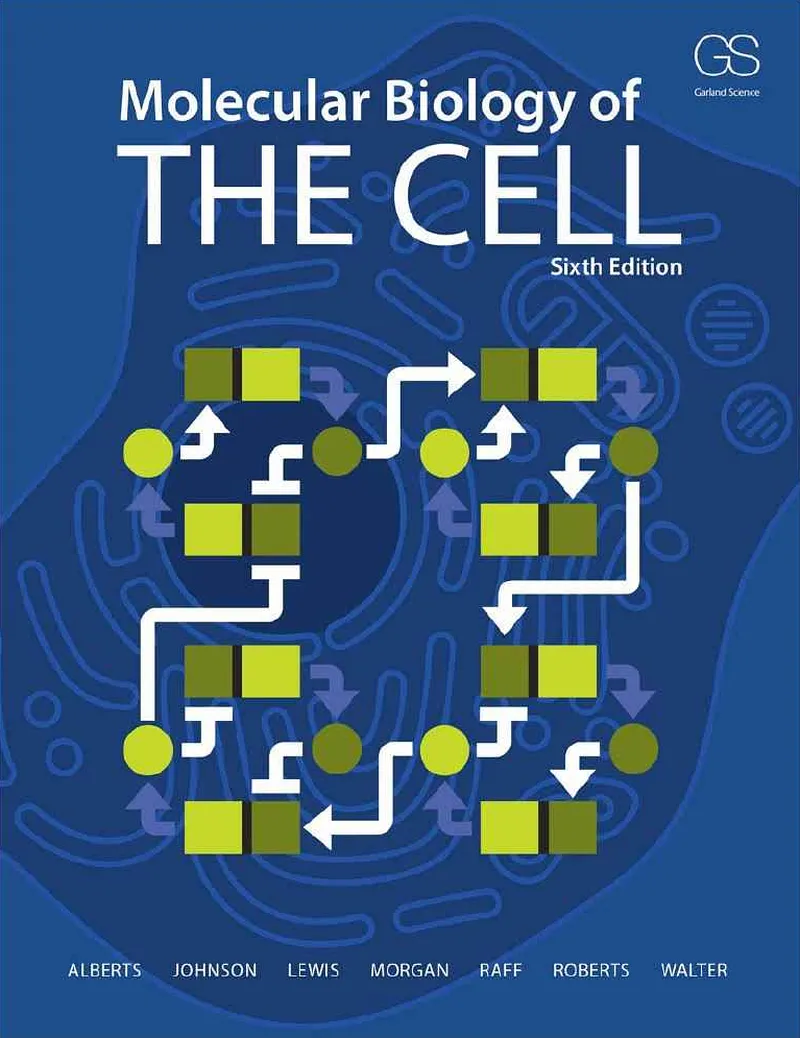

Molecular Biology of the Cell, Sixth Edition – Bruce Alberts
Molecular Biology of the Cell, Sixth Edition by Bruce Alberts and colleagues is a widely recognized textbook covering the fundamental principles of modern cell and molecular biology. Published by Garland Science, this edition provides an extensive exploration of how cells are organized, how they function, and how molecular processes control cellular life.
With 1,464 pages, the sixth edition offers comprehensive coverage suitable for students, researchers, and professionals studying cell biology, molecular biology, genetics, biochemistry, and related life sciences.
About Molecular Biology of the Cell
Cells are the fundamental units of living organisms, and understanding their molecular organization is essential for studying modern biology and medicine.
Molecular Biology of the Cell examines the mechanisms that allow cells to grow, communicate, divide, adapt, and maintain their internal organization. It connects molecular processes with cellular structures and functions to provide a detailed picture of how living cells work.
Cell Structure and Organization
Cells contain highly organized structures that perform specialized functions.
The book explores important cellular components such as cell membranes, organelles, cytoskeletons, chromosomes, and intracellular compartments and explains how these structures contribute to cellular organization and function.
Understanding these relationships is fundamental to cell biology.
Molecular Biology and Genetics
Modern cell biology is closely connected to molecular genetics.
Important concepts include DNA replication, gene expression, transcription, RNA processing, translation, genome organization, and regulation of gene activity.
These processes explain how genetic information is stored, copied, and used to control cellular functions.
Proteins and Cellular Functions
Proteins perform many of the essential functions within cells.
They act as enzymes, structural components, receptors, transporters, signaling molecules, and regulatory proteins.
Understanding how proteins are produced, modified, transported, and regulated helps explain many of the molecular mechanisms underlying cellular activity.
Cell Signaling and Communication
Cells constantly receive and respond to information from their surroundings.
Cell signaling involves networks of receptors, signaling molecules, and intracellular pathways that regulate processes such as growth, metabolism, differentiation, movement, and survival.
These mechanisms are particularly important in understanding development and disease.
Cell Division and the Cell Cycle
The cell cycle coordinates the growth and division of cells.
The regulation of DNA replication, chromosome segregation, mitosis, and cytokinesis ensures that genetic information is properly distributed to daughter cells.
Abnormal regulation of cell division is also closely associated with diseases such as cancer.
Cellular Respiration and Metabolism
Cells require energy to perform their functions.
Cellular metabolism involves interconnected biochemical pathways that allow cells to obtain energy, synthesize molecules, and maintain cellular processes.
Understanding these pathways connects molecular biology with biochemistry and cellular physiology.
Development and Differentiation
Multicellular organisms contain many specialized cell types.
Cell differentiation allows cells with the same basic genetic information to develop different structures and functions.
Molecular mechanisms controlling gene expression, cell signaling, development, and differentiation are therefore important areas of modern cell biology.
Cell Biology and Disease
Many diseases are associated with abnormalities at the cellular or molecular level.
Changes in DNA, proteins, signaling pathways, cell division, or cellular organization can contribute to cancer, genetic disorders, immune diseases, and other conditions.
Understanding normal cellular mechanisms provides the foundation for understanding how these processes become disrupted.
Who Is This Book For?
Molecular Biology of the Cell, Sixth Edition can be useful for:
- Biology students
- Cell biology students
- Molecular biology students
- Genetics students
- Biochemistry students
- Medical students
- Biotechnology students
- Biomedical science students
- Graduate students
- Life science researchers
It can also serve as an advanced reference for readers who want a deeper understanding of cellular and molecular mechanisms.
Why Study Molecular Biology of the Cell?
Cell biology provides a foundation for many areas of modern science.
Understanding how cells store and express genetic information, communicate, divide, obtain energy, and respond to their environment is essential for studying genetics, developmental biology, biotechnology, immunology, cancer biology, and medicine.
A comprehensive cell biology textbook can therefore serve as a foundation for many advanced biological disciplines.
Final Thoughts
Molecular Biology of the Cell, Sixth Edition by Bruce Alberts and colleagues provides an extensive examination of the molecular mechanisms underlying cellular life.
The book covers major areas including cell structure, molecular genetics, DNA and RNA biology, proteins, cell signaling, metabolism, the cell cycle, cell division, development, differentiation, and cellular disease mechanisms.
With 1,464 pages, this edition provides substantial material for students and researchers seeking a detailed understanding of modern cell and molecular biology.
For readers studying cell biology, molecular biology, genetics, biochemistry, biotechnology, medicine, and biomedical science, this textbook can be a valuable reference for exploring the molecular organization and function of living cells.
Book Information
Title: Molecular Biology of the Cell
Edition: Sixth Edition
Author: Bruce Alberts
Publisher: Garland Science
Publication Date: November 18, 2014
Language: English
Print Length: 1,464 pages
ISBN-10: 9780815344322
ISBN-13: 978-0815344322
ASIN: 0815344325
Subject: Cell Biology / Molecular Biology / Genetics / Biochemistry / Biomedical Science
Molecular Biology of the Cell, Sixth Edition provides a comprehensive foundation in cell structure, molecular genetics, gene expression, proteins, cell signaling, metabolism, cell division, development, and cellular disease mechanisms, making it a valuable resource for students and researchers in the life and biomedical sciences.
Support the Creators!
If you enjoy this book, please consider supporting the author and publisher by purchasing a physical or digital copy. Buying official copies ensures authors can keep writing great books.