
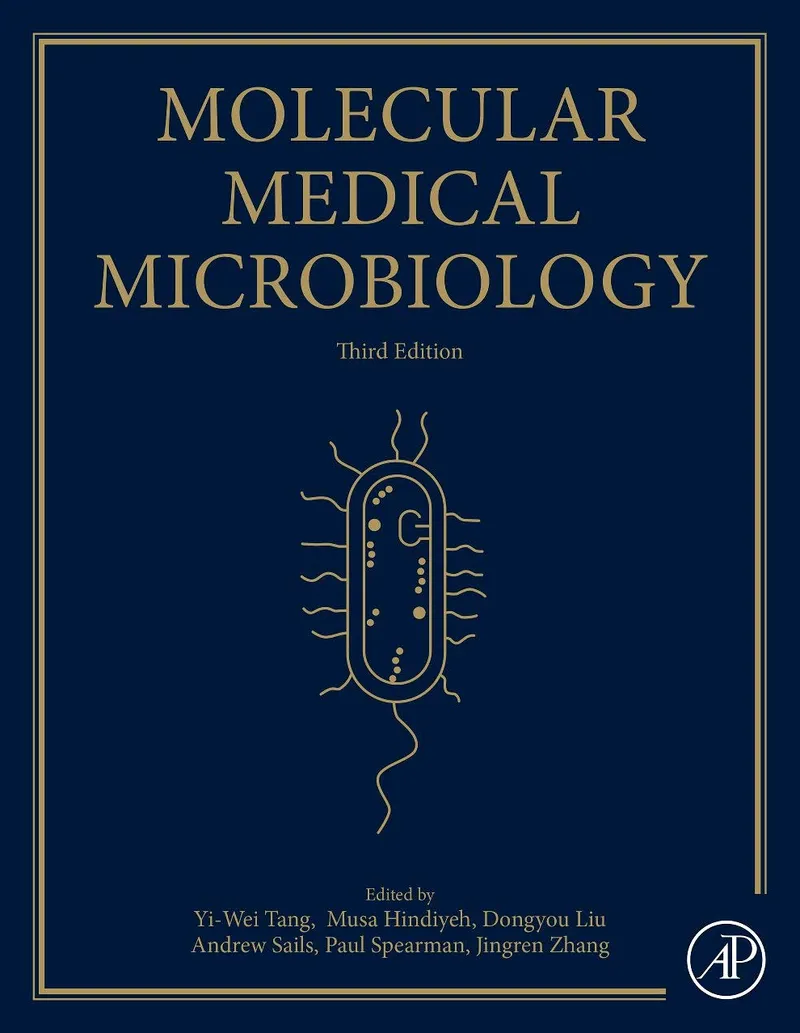

Molecular Medical Microbiology, 3rd Edition
Molecular Medical Microbiology, 3rd Edition is an extensive reference work exploring the molecular and biological foundations of microorganisms associated with human health and disease. Published by Academic Press, this edition provides an in-depth examination of medical microbiology through the perspectives of molecular biology, genetics, microbial physiology, pathogenesis, diagnostics, and modern biomedical research.
With 3,524 pages, this is a substantial multi-volume-style reference intended for readers who want detailed coverage of molecular medical microbiology rather than a short introductory textbook.
About Molecular Medical Microbiology
Modern medical microbiology increasingly depends on molecular biology to understand how microorganisms grow, adapt, interact with their hosts, and cause disease.
Advances in DNA sequencing, microbial genetics, molecular diagnostics, genomics, and other technologies have transformed the study of infectious microorganisms.
Molecular Medical Microbiology brings these areas together, providing a detailed perspective on the molecular mechanisms underlying microbial biology and human infection.
Molecular Biology of Microorganisms
Microbial DNA contains the information required for cellular growth, reproduction, adaptation, and survival.
Understanding gene organization, gene expression, regulation, mutation, and genetic exchange is essential for explaining how microorganisms respond to their environments and develop new characteristics.
Molecular biology therefore provides an important foundation for understanding microbial behavior and disease.
Microbial Genetics and Genomics
Genetic variation can influence microbial characteristics such as virulence, antimicrobial resistance, metabolism, and host adaptation.
Modern genomic technologies allow researchers to examine microorganisms at an unprecedented level of detail. Genome sequencing and comparative genomics can reveal relationships between microbial strains and provide insight into the evolution of important characteristics.
These approaches are increasingly important in medical microbiology and infectious disease research.
Molecular Mechanisms of Pathogenesis
Microbial pathogens use a variety of molecular mechanisms to establish infections.
They may attach to host cells, invade tissues, alter host signaling pathways, produce toxins, acquire nutrients, or evade immune defenses.
Understanding these molecular interactions helps researchers explain how infections develop and provides potential targets for diagnostic and therapeutic strategies.
Host-Microbe Interactions
Human health depends on complex interactions between microorganisms and their hosts.
Some microorganisms can cause disease, while others coexist with humans as part of normal microbial communities.
Molecular approaches allow scientists to investigate these interactions at the level of genes, proteins, signaling pathways, and microbial communities.
Molecular Diagnostics
Modern diagnostic microbiology increasingly relies on molecular technologies.
Methods based on the detection and analysis of microbial genetic material can provide rapid and highly specific information about infectious organisms.
Molecular diagnostics have become particularly important for identifying pathogens that may be difficult to detect using traditional culture-based methods.
Antimicrobial Resistance
Antimicrobial resistance is one of the major challenges in modern infectious disease research.
Molecular microbiology helps explain how microorganisms acquire and express resistance mechanisms. Genetic analysis can also help researchers track the spread and evolution of resistant organisms.
Understanding the molecular basis of resistance is important for developing improved diagnostic methods and antimicrobial strategies.
Microbial Physiology and Cellular Processes
Microbial physiology examines how microorganisms obtain energy, acquire nutrients, regulate cellular processes, and respond to environmental changes.
These processes are closely connected to pathogenicity because microorganisms must adapt to the conditions encountered within the human host.
Studying microbial physiology at the molecular level can therefore provide important insight into infectious disease mechanisms.
Molecular Epidemiology
Molecular technologies can also be used to investigate the spread of infectious microorganisms.
Genomic data can help researchers compare microbial strains, identify relationships between isolates, investigate outbreaks, and monitor the emergence of new variants.
This connection between molecular microbiology and epidemiology has become increasingly important in modern public health.
Modern Approaches to Medical Microbiology
Contemporary medical microbiology increasingly combines traditional microbiological techniques with advanced molecular approaches.
Areas such as genomics, transcriptomics, molecular diagnostics, bioinformatics, microbial genetics, and systems biology provide new ways to study microorganisms and infectious diseases.
These technologies have expanded the ability of researchers to investigate pathogens at both cellular and population levels.
Who Is This Book For?
Molecular Medical Microbiology, 3rd Edition can be particularly useful for:
- Medical microbiologists
- Microbiology students
- Molecular biology students
- Biomedical researchers
- Medical students
- Biotechnology students
- Infectious disease researchers
- Clinical microbiologists
- Graduate students
- Academic researchers
- Professionals working in molecular diagnostics
Because of its extensive size and specialized subject matter, it is especially suitable as an advanced reference rather than a first introduction to microbiology.
Why Study Molecular Medical Microbiology?
Molecular microbiology helps explain infectious disease at a deeper level.
Instead of focusing only on identifying a microorganism, molecular approaches allow researchers to ask more detailed questions:
Which genes contribute to pathogenicity? How does a microorganism regulate its virulence? How does it evade the immune system? How does antimicrobial resistance develop? How can genetic information be used to identify and track pathogens?
These questions demonstrate how molecular biology has become an essential part of modern medical microbiology.
Final Thoughts
Molecular Medical Microbiology, 3rd Edition provides an extensive examination of the molecular mechanisms underlying microbial biology, host interactions, and infectious disease.
The book covers important areas including microbial genetics, genomics, molecular pathogenesis, host-microbe interactions, microbial physiology, molecular diagnostics, antimicrobial resistance, and molecular epidemiology.
With 3,524 pages, this edition offers considerably more depth than a conventional medical microbiology textbook and is well suited to advanced study and research.
For readers in microbiology, medicine, molecular biology, biotechnology, biomedical science, clinical microbiology, and infectious disease research, Molecular Medical Microbiology can serve as a substantial reference for exploring how molecular science is transforming our understanding of microorganisms and human disease.
Book Information
Title: Molecular Medical Microbiology
Edition: 3rd Edition
Publisher: Academic Press
Publication Date: November 28, 2023
Language: English
Print Length: 3,524 pages
ISBN-10: 0128186194
ISBN-13: 978-0128186190
Subject: Molecular Microbiology / Medical Microbiology / Microbial Genetics / Molecular Pathogenesis / Infectious Diseases
Molecular Medical Microbiology, 3rd Edition offers an extensive exploration of microbial genetics, genomics, molecular pathogenesis, host-microbe interactions, molecular diagnostics, antimicrobial resistance, and infectious disease research, making it a valuable advanced reference for students, researchers, and professionals in medical and molecular microbiology.
Support the Creators!
If you enjoy this book, please consider supporting the author and publisher by purchasing a physical or digital copy. Buying official copies ensures authors can keep writing great books.