
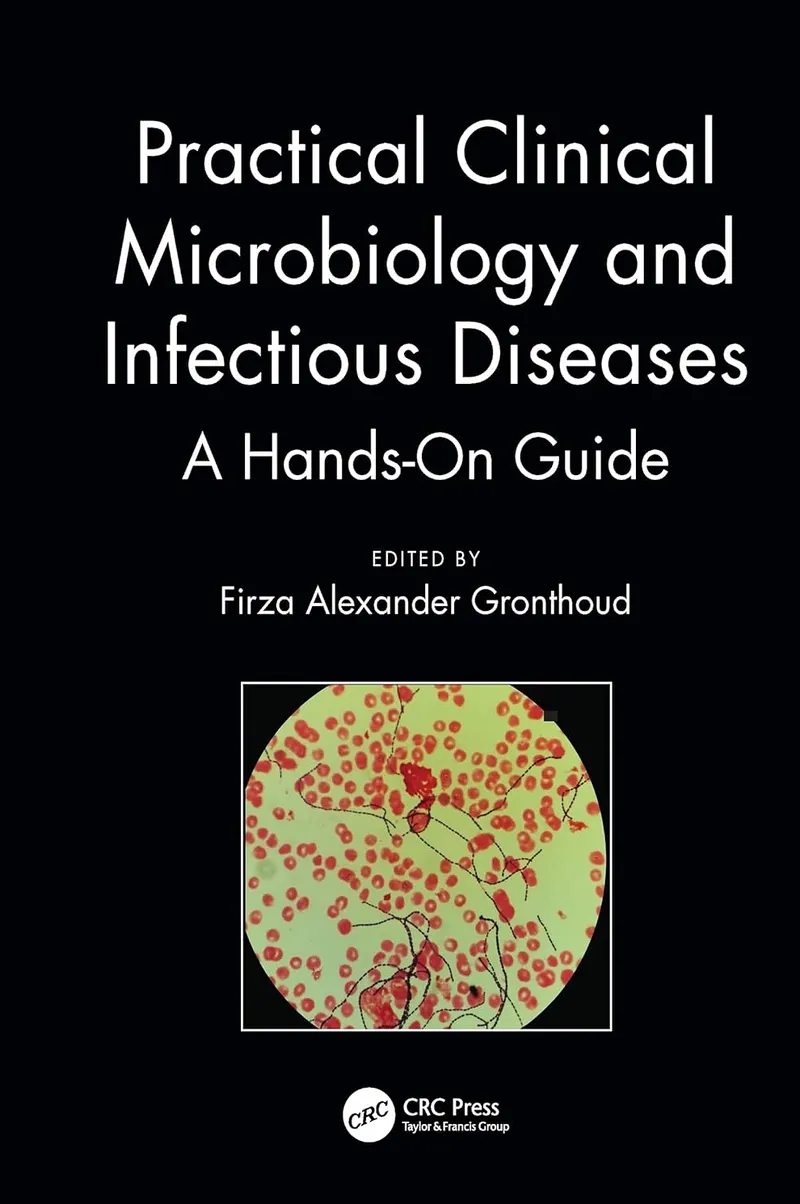

Practical Clinical Microbiology and Infectious Diseases: A Hands-On Guide
Practical Clinical Microbiology and Infectious Diseases: A Hands-On Guide is a practical reference connecting microbiological laboratory methods with the diagnosis and investigation of infectious diseases. Published by CRC Press, this first edition is designed to help readers understand how clinical microbiology contributes to identifying pathogens and supporting the management of infections.
With 462 pages, the book provides a useful resource for students, laboratory professionals, and healthcare learners interested in clinical microbiology, infectious diseases, laboratory diagnosis, and infection control.
About Practical Clinical Microbiology
Clinical microbiology connects fundamental microbiological science with real-world healthcare.
Identifying the microorganism responsible for an infection often requires combining clinical information with laboratory investigations. Understanding specimen collection, microbiological testing, organism identification, and interpretation of results is therefore an important part of clinical practice.
This book takes a hands-on approach to these concepts, making it particularly relevant to readers interested in practical laboratory applications.
Clinical Microbiology and Infectious Diseases
Infectious diseases can be caused by a wide variety of microorganisms, including bacteria, viruses, fungi, and parasites.
Clinical microbiology provides the laboratory foundation for detecting and identifying these pathogens. Accurate microbiological investigation can help distinguish between different infections and provide information relevant to patient care.
Laboratory Diagnosis
Laboratory diagnosis is a central part of clinical microbiology.
Depending on the suspected infection, laboratory investigations may include:
- Specimen collection and processing
- Microscopy
- Staining techniques
- Microbial culture
- Biochemical identification
- Antigen and antibody testing
- Molecular diagnostics
- Antimicrobial susceptibility testing
Understanding the purpose and limitations of these methods is essential for interpreting microbiological findings correctly.
Specimen Collection and Handling
The quality of a microbiological result can depend heavily on the quality of the clinical specimen.
Appropriate collection, transportation, storage, and processing help reduce contamination and improve the likelihood of detecting the suspected pathogen.
These practical considerations are particularly important for students and laboratory professionals developing clinical microbiology skills.
Identification of Pathogens
Once a microorganism has been recovered or detected, laboratory methods can be used to determine its identity.
Traditional identification may rely on microscopic characteristics, culture properties, and biochemical reactions, while modern laboratories increasingly use molecular and other advanced techniques.
Learning how these approaches work helps readers understand the process of moving from a clinical specimen to a microbiological diagnosis.
Antimicrobial Susceptibility Testing
Determining how microorganisms respond to antimicrobial agents is an important component of clinical microbiology.
Susceptibility testing can provide information that assists in the selection of appropriate antimicrobial therapy and helps laboratories monitor patterns of antimicrobial resistance.
This makes antimicrobial testing an important connection between microbiological laboratory work and clinical infectious disease management.
Infection Control
Clinical microbiology also contributes to infection prevention and control.
Laboratory identification of pathogens can support the investigation of healthcare-associated infections and help monitor the spread of infectious organisms.
Basic microbiological principles are therefore relevant to sterilization, disinfection, specimen handling, surveillance, and infection-control practices.
A Hands-On Approach
The practical nature of this book makes it suitable for readers who want to understand microbiology beyond theoretical concepts.
Hands-on learning can help students develop a clearer understanding of how laboratory procedures are performed and how microbiological results relate to infectious diseases.
It can be especially useful alongside lectures, laboratory courses, and more comprehensive medical microbiology textbooks.
Who Is This Book For?
Practical Clinical Microbiology and Infectious Diseases can be useful for:
- Medical students
- Microbiology students
- Medical laboratory students
- Biomedical science students
- Clinical laboratory professionals
- Healthcare professionals
- Infectious disease students
- Nursing and allied health students
- Researchers working with clinical microbiology
It can also serve as supplementary reading for laboratory-based microbiology courses.
Why Study Clinical Microbiology?
Clinical microbiology provides an important bridge between microbial biology and patient care.
Understanding how pathogens are detected, identified, and tested helps students appreciate the role of the laboratory in diagnosing infectious diseases and supporting clinical decision-making.
The subject is therefore important for anyone preparing for a career involving laboratory medicine, healthcare, or infectious disease research.
Final Thoughts
Practical Clinical Microbiology and Infectious Diseases: A Hands-On Guide provides a practical introduction to the laboratory investigation of infectious diseases.
The book focuses on areas such as clinical specimens, microbiological techniques, pathogen identification, laboratory diagnosis, antimicrobial susceptibility testing, infectious diseases, and infection control.
With 462 pages, this first edition offers a substantial resource for readers seeking to develop practical knowledge of clinical microbiology and understand how laboratory methods are applied to infectious disease investigation.
For students and professionals in microbiology, medical laboratory science, medicine, biomedical science, and infectious diseases, this book can be a useful companion for connecting laboratory practice with clinical applications.
Book Information
Title: Practical Clinical Microbiology and Infectious Diseases: A Hands-On Guide
Edition: 1st Edition
Publisher: CRC Press
Publication Date: September 29, 2020
Language: English
Print Length: 462 pages
ISBN-10: 1138721751
ISBN-13: 978-1138721753
Subject: Clinical Microbiology / Infectious Diseases / Laboratory Diagnosis / Medical Microbiology / Infection Control
Practical Clinical Microbiology and Infectious Diseases: A Hands-On Guide covers clinical microbiology techniques, specimen handling, pathogen identification, laboratory diagnosis, antimicrobial susceptibility testing, infectious diseases, and infection control, making it a useful practical resource for students and professionals in clinical and laboratory sciences.
Support the Creators!
If you enjoy this book, please consider supporting the author and publisher by purchasing a physical or digital copy. Buying official copies ensures authors can keep writing great books.