
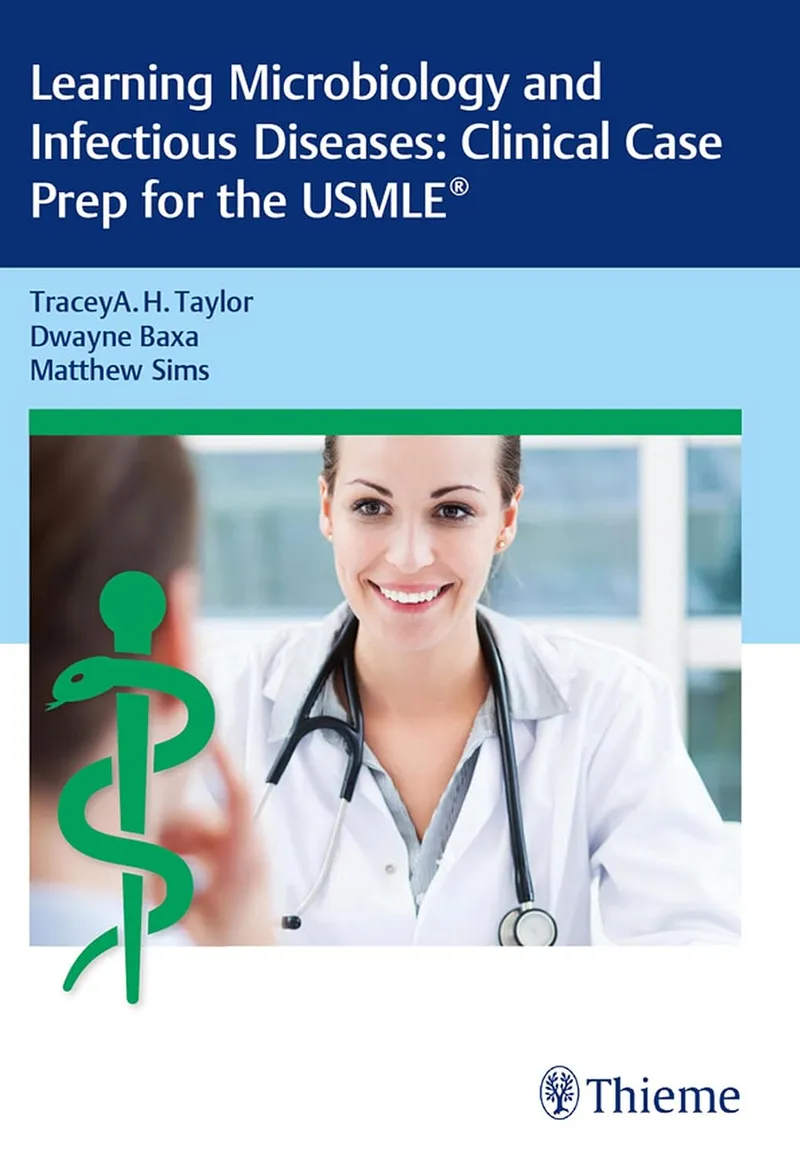

Learning Microbiology and Infectious Diseases: Clinical Case Prep for the USMLE
Learning Microbiology and Infectious Diseases: Clinical Case Prep for the USMLE is a focused study resource that combines microbiology and infectious disease concepts with clinical case-based learning. Published by Thieme Medical Publishers, this first edition is designed to help medical students connect fundamental microbiology with clinical presentations and examination-style problems.
By presenting microbiological concepts in a clinical context, the book can help readers develop a stronger understanding of infectious diseases, pathogens, diagnosis, and clinical reasoning while preparing for the USMLE.
About Learning Microbiology and Infectious Diseases
Microbiology can be challenging because students must learn the characteristics of numerous microorganisms while also understanding the diseases they cause.
A clinical approach makes these concepts easier to connect. Instead of studying pathogens as isolated facts, students can relate them to patient presentations, routes of transmission, disease mechanisms, laboratory findings, and appropriate clinical considerations.
This approach is particularly valuable when preparing for medical examinations.
Clinical Microbiology and Infectious Diseases
Infectious diseases may be caused by bacteria, viruses, fungi, and parasites, with each group having different biological characteristics and disease mechanisms.
Understanding these differences helps students recognize patterns in clinical cases and determine which pathogens are most likely to be associated with particular symptoms, exposures, or laboratory findings.
Case-Based Learning
Clinical cases provide an effective way to apply microbiological knowledge.
A typical case may require students to consider:
- Patient symptoms and clinical findings
- Epidemiological and exposure history
- Likely causative microorganism
- Mechanism of disease
- Appropriate diagnostic testing
- Laboratory findings
- Principles of treatment and prevention
This type of reasoning helps transform memorized information into clinically useful knowledge.
Microorganisms and Disease
A strong understanding of infectious disease begins with recognizing the relationship between microorganisms and their hosts.
Pathogens can invade tissues, produce toxins, interfere with cellular processes, or evade immune defenses. These mechanisms contribute to the clinical manifestations associated with different infections.
Connecting microbial characteristics with disease presentation can make difficult concepts easier to remember.
Diagnosis of Infectious Diseases
Laboratory diagnosis is an important component of medical microbiology.
Depending on the suspected infection, diagnostic methods may include microscopy, culture, serology, antigen detection, molecular testing, and antimicrobial susceptibility testing.
Students preparing for medical examinations need to understand not only which test can detect an organism but also how laboratory findings relate to the clinical case.
Clinical Reasoning for Medical Students
The study of infectious diseases requires more than recalling organism names.
Students must often integrate information about the patient, pathogen, route of transmission, clinical presentation, laboratory findings, and disease progression.
A case-based learning format encourages this type of integrated reasoning and can help students approach unfamiliar questions more systematically.
USMLE Preparation
For students preparing for the USMLE, microbiology and infectious diseases are important components of medical knowledge.
A review resource focused on clinical cases can be used to reinforce core concepts and practice applying them to patient scenarios.
It is particularly useful as a supplementary resource alongside comprehensive microbiology and medical textbooks.
Who Is This Book For?
Learning Microbiology and Infectious Diseases: Clinical Case Prep for the USMLE can be useful for:
- Medical students
- USMLE candidates
- Students studying microbiology
- Students studying infectious diseases
- International medical graduates
- Healthcare students preparing for examinations
- Readers seeking case-based microbiology review
The book is especially relevant to learners who prefer studying microbiology through clinical scenarios rather than relying exclusively on traditional textbook chapters.
Why Use Clinical Cases to Study Microbiology?
Clinical cases help demonstrate how microbiological knowledge is used in real medical situations.
By working through cases, students can practice identifying important clues, connecting symptoms with pathogens, interpreting diagnostic information, and distinguishing between similar infectious diseases.
This approach can make microbiology more practical and easier to integrate with other areas of medical education.
Final Thoughts
Learning Microbiology and Infectious Diseases: Clinical Case Prep for the USMLE provides a clinically oriented approach to studying microorganisms and infectious diseases.
The book combines microbiology, infectious disease concepts, clinical presentations, diagnostic reasoning, and case-based learning, making it particularly relevant to medical students preparing for examinations.
Published by Thieme Medical Publishers, this first edition can serve as a supplementary study resource for students who want to strengthen their ability to apply microbiology knowledge to clinical scenarios and USMLE-style preparation.
Book Information
Title: Learning Microbiology and Infectious Diseases: Clinical Case Prep for the USMLE
Edition: 1st Edition
Publisher: Thieme Medical Publishers
Publication Date: January 27, 2020
Language: English
ISBN-13: 978-1638534662
ASIN: B09ZK4PCYV
Subject: Medical Microbiology / Infectious Diseases / Clinical Cases / USMLE Preparation / Medical Education
Learning Microbiology and Infectious Diseases: Clinical Case Prep for the USMLE combines microbiology, infectious diseases, clinical cases, diagnostic reasoning, and examination preparation, making it a useful study resource for medical students and USMLE candidates seeking to apply microbiological concepts to clinical scenarios.
Support the Creators!
If you enjoy this book, please consider supporting the author and publisher by purchasing a physical or digital copy. Buying official copies ensures authors can keep writing great books.