
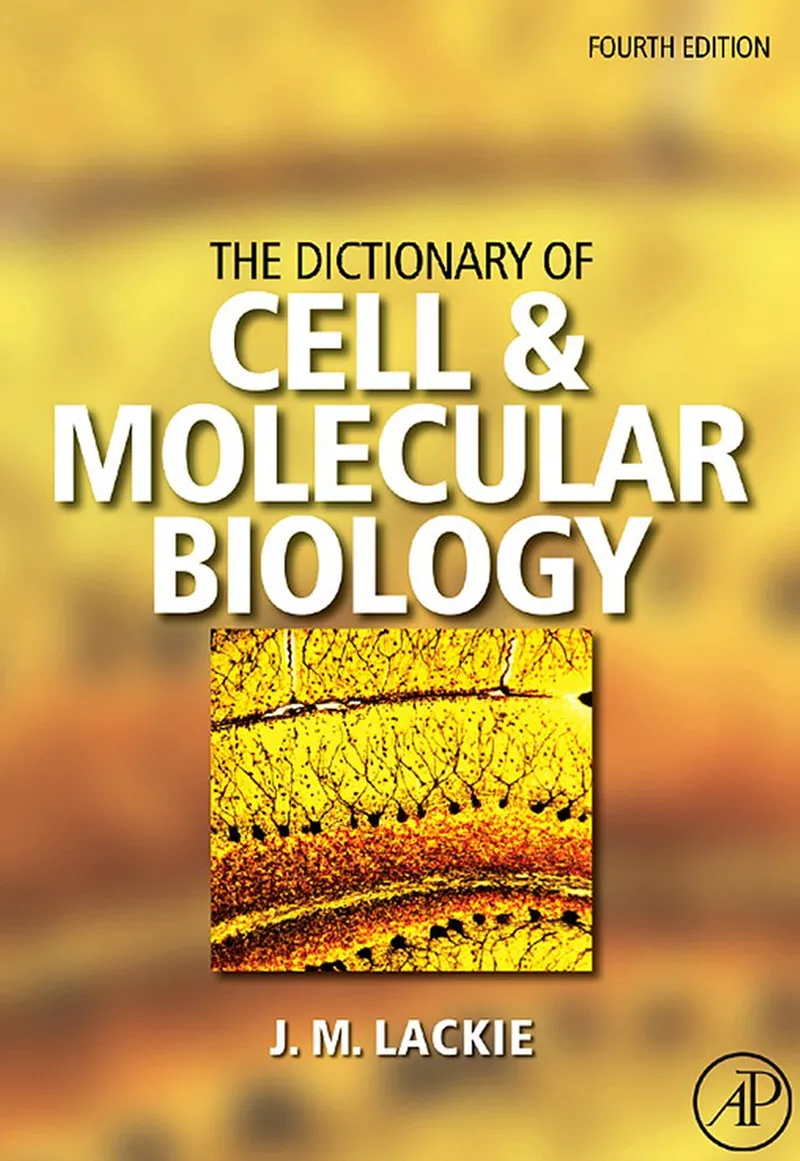

The Dictionary of Cell and Molecular Biology, 4th Edition
The Dictionary of Cell and Molecular Biology, 4th Edition by John M. Lackie is a comprehensive reference work covering the terminology and concepts used throughout modern cell biology and molecular biology. Published by Academic Press, this fourth edition is designed as a convenient resource for students, researchers, and professionals who need clear explanations of scientific terms and concepts.
With 1,424 pages, the dictionary provides extensive coverage of terminology across cell biology, molecular biology, genetics, biochemistry, microbiology, and related life sciences.
About The Dictionary of Cell and Molecular Biology
Cell and molecular biology involve a large and constantly evolving vocabulary.
Terms related to cellular structures, genes, proteins, signaling pathways, molecular techniques, metabolism, and genetics can sometimes be difficult to understand, particularly for students encountering them for the first time.
A specialized scientific dictionary provides a convenient way to clarify unfamiliar terminology and strengthen understanding of important biological concepts.
Cell Biology Terminology
Cell biology examines the structure, organization, and functions of cells.
Important concepts include cell membranes, organelles, cytoskeletons, intracellular transport, cell signaling, cell division, and cellular communication.
Understanding the terminology associated with these processes is essential for students studying biology, medicine, biotechnology, and related disciplines.
Molecular Biology Concepts
Molecular biology focuses on the molecular mechanisms underlying biological processes.
The field includes subjects such as DNA, RNA, genes, proteins, gene expression, replication, transcription, translation, and molecular regulation.
A comprehensive reference covering this terminology can help students connect individual terms with the broader concepts they encounter in textbooks and research literature.
Genetics and Gene Expression
Modern cell and molecular biology are closely connected with genetics.
Concepts involving genomes, chromosomes, mutations, genetic regulation, recombinant DNA, and gene expression are fundamental to many areas of biological science.
Understanding the terminology used in genetics can make scientific literature and advanced textbooks easier to follow.
Biochemistry and Cellular Processes
Many cellular processes are based on biochemical reactions.
Terms associated with enzymes, metabolism, proteins, nucleic acids, molecular interactions, and energy production are therefore frequently encountered in both cell biology and molecular biology.
The overlap between these disciplines makes a broad reference particularly useful for interdisciplinary study.
Laboratory and Molecular Biology Techniques
Modern biological research uses a wide variety of laboratory techniques.
Students and researchers may encounter terminology related to DNA analysis, protein studies, microscopy, cell culture, molecular cloning, electrophoresis, sequencing, and other experimental methods.
Having access to a specialized dictionary can help readers understand unfamiliar technical language encountered in laboratory manuals and scientific publications.
A Useful Reference for Students
Scientific dictionaries are particularly valuable when used alongside textbooks.
Rather than interrupting study to search for the meaning of an unfamiliar term, students can consult a dedicated reference and quickly return to the subject they are studying.
This can be helpful when reading advanced material in cell biology, molecular biology, genetics, biochemistry, microbiology, and biomedical sciences.
Who Is This Book For?
The Dictionary of Cell and Molecular Biology can be useful for:
- Biology students
- Microbiology students
- Molecular biology students
- Biochemistry students
- Biotechnology students
- Medical students
- Biomedical science students
- Life science researchers
- Laboratory professionals
- University instructors
It can also serve as a general reference for readers who regularly encounter technical terminology in biological and biomedical literature.
Why Use a Cell and Molecular Biology Dictionary?
Cell and molecular biology are interdisciplinary fields, and terminology from different areas often overlaps.
A single biological concept may involve elements of genetics, biochemistry, physiology, microbiology, and molecular biology.
A comprehensive dictionary can therefore be useful not only for defining individual words but also for helping readers navigate the specialized language of modern life sciences.
Final Thoughts
The Dictionary of Cell and Molecular Biology, 4th Edition by John M. Lackie is an extensive reference for terminology used in cell and molecular biology and related scientific disciplines.
The book covers concepts associated with cell structure and function, molecular biology, genetics, biochemistry, gene expression, cellular processes, and biological research techniques.
With 1,424 pages, this fourth edition provides a substantial reference for students and professionals who need to understand specialized terminology across the life sciences.
For readers studying cell biology, molecular biology, microbiology, genetics, biotechnology, biochemistry, medicine, and biomedical science, this dictionary can be a valuable companion for clarifying technical language and strengthening scientific understanding.
Book Information
Title: The Dictionary of Cell and Molecular Biology
Author: John M. Lackie
Edition: 4th Edition
Publisher: Academic Press
Publication Date: October 4, 2007
Language: English
Print Length: 1,424 pages
ISBN-13: 978-0080550343
ASIN: B005H8CZ26
Subject: Cell Biology / Molecular Biology / Genetics / Biochemistry / Life Sciences
The Dictionary of Cell and Molecular Biology, 4th Edition provides an extensive reference for cell biology, molecular biology, genetics, biochemistry, and related life sciences, making it a useful resource for students, researchers, and professionals seeking clear explanations of specialized biological terminology.
Support the Creators!
If you enjoy this book, please consider supporting the author and publisher by purchasing a physical or digital copy. Buying official copies ensures authors can keep writing great books.