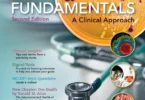

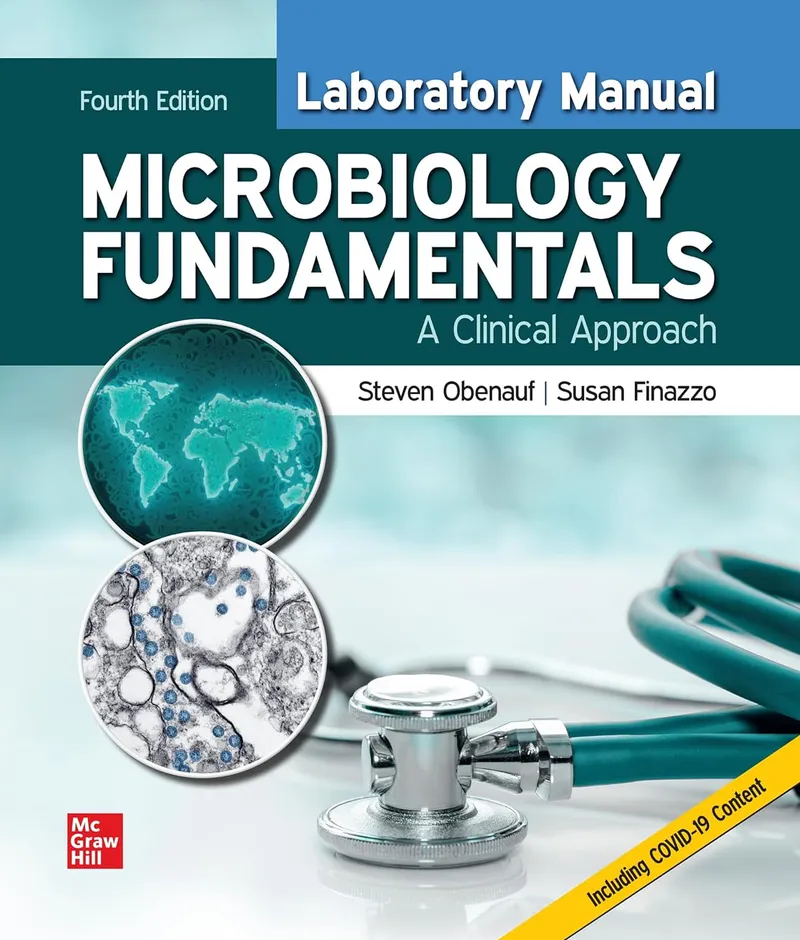

Laboratory Manual for Microbiology Fundamentals: A Clinical Approach, 4th Edition
Laboratory Manual for Microbiology Fundamentals: A Clinical Approach, 4th Edition by Steven Obenauf is a practical microbiology laboratory resource designed to help students develop essential laboratory skills while connecting fundamental microbiological techniques with clinical applications. The manual provides a hands-on complement to introductory microbiology courses, giving students opportunities to apply concepts related to microbial structure, growth, identification, laboratory safety, staining, culturing, and clinical microbiology.
Laboratory work is an essential part of learning microbiology. Concepts such as bacterial morphology, microbial growth, aseptic technique, staining, biochemical reactions, and pathogen identification become much easier to understand when students can observe and perform the underlying procedures themselves. A laboratory manual provides the structured instructions needed to turn these concepts into practical skills.
The clinical approach of this manual makes it particularly relevant for students preparing for careers in healthcare, laboratory science, and other health-related fields. Instead of treating laboratory procedures as isolated exercises, the manual helps place microbiological techniques within the broader context of identifying microorganisms and understanding their potential significance in human disease.
About the Laboratory Manual
Microbiology laboratory courses introduce students to techniques that form the foundation of clinical and research microbiology. Students learn how to work safely with microorganisms, prevent contamination, observe microbial characteristics, grow organisms under controlled conditions, and use laboratory tests to distinguish between different microorganisms.
Laboratory Manual for Microbiology Fundamentals: A Clinical Approach is designed around this practical side of microbiology. It gives students an opportunity to reinforce concepts learned in lectures by performing laboratory exercises and interpreting observations.
This combination of fundamental microbiology and clinical relevance can be particularly useful for students who are encountering microbiology laboratory work for the first time.
Learning Microbiology Through Laboratory Practice
Reading about microbiology provides the theoretical foundation, but laboratory experience adds another dimension to that knowledge.
For example, a textbook can explain that bacteria differ in cell shape, arrangement, staining characteristics, and biochemical properties. A laboratory exercise allows students to actually observe these differences and learn how microbiologists use them to identify organisms.
The same principle applies to microbial growth. Students can study growth curves and environmental requirements theoretically, but laboratory activities demonstrate how temperature, nutrients, oxygen availability, and other conditions influence microbial growth.
Practical work therefore helps transform microbiology from a subject based largely on terminology into an experimental science.
Laboratory Safety and Good Microbiological Practice
Safety is one of the most important foundations of microbiology laboratory work.
Students working with microorganisms need to understand how to handle cultures, laboratory equipment, specimens, and contaminated materials responsibly. Proper laboratory behavior also reduces the risk of accidental contamination and helps maintain the integrity of experimental results.
A clinical microbiology laboratory requires careful attention to procedures because samples may contain microorganisms capable of causing disease. Developing good laboratory habits during an introductory course therefore provides useful preparation for more advanced clinical and diagnostic environments.
Aseptic Technique
Aseptic technique is fundamental to microbiology.
The purpose of aseptic technique is to prevent unwanted microorganisms from contaminating cultures, equipment, laboratory surfaces, or samples. Students learn that even a small amount of contamination can alter an experiment or lead to an incorrect interpretation.
Developing reliable aseptic technique is therefore one of the most valuable practical skills students can acquire in a microbiology laboratory.
The principles involved extend well beyond a single course and remain relevant in clinical laboratories, research laboratories, pharmaceutical production, biotechnology, and other environments where microorganisms are handled.
Microscopy and the Observation of Microorganisms
Because microorganisms are generally too small to be observed directly, microscopy is an essential microbiological technique.
Laboratory exercises involving microscopy allow students to become familiar with the microscope and learn how magnification, illumination, focusing, and specimen preparation influence what they observe.
Students can also begin to recognize differences in microbial morphology, including cellular shape and arrangement. These observations provide some of the earliest clues used in microbiological identification.
Staining Techniques
Staining is one of the most important tools used to make microorganisms visible under the microscope.
Different staining procedures can reveal characteristics that are difficult or impossible to distinguish in unstained preparations. Students can learn how staining techniques provide information about microbial morphology, cellular structures, and differences between groups of bacteria.
The Gram stain, in particular, is an important technique in microbiology because it separates many bacteria into Gram-positive and Gram-negative groups based on differences in their cell envelope structures.
Learning how to prepare and interpret stained specimens gives students practical experience with one of the fundamental procedures used in microbiology and clinical laboratory work.
Culturing Microorganisms
Microorganisms can be grown in laboratory media under controlled conditions. Culturing provides researchers and clinical microbiologists with an opportunity to observe microbial growth and obtain material for further testing.
Laboratory exercises involving culture media can help students understand why different media are selected for different purposes and how environmental conditions influence microbial growth.
Students can also learn to recognize characteristics such as colony morphology, which may provide useful preliminary information about an organism.
Microbial Identification
One of the central themes of clinical microbiology is identifying microorganisms.
A microorganism recovered from a patient specimen cannot always be identified from its appearance alone. Microbiologists therefore use combinations of observations and laboratory tests to narrow down the possible identity of an organism.
These may include:
- Cellular morphology
- Staining reactions
- Colony characteristics
- Growth patterns
- Biochemical reactions
- Metabolic properties
- Selective and differential media
- Other diagnostic laboratory procedures
Learning how these pieces of evidence are combined helps students understand the reasoning process behind microbial identification.
Biochemical Testing
Microorganisms differ in the ways they obtain nutrients and process chemical compounds. These metabolic differences can be used as diagnostic characteristics.
Biochemical tests therefore provide an important bridge between microbial physiology and clinical identification.
Students can learn how the results of individual tests contribute to a larger identification process and why no single observation should necessarily be considered in isolation.
This approach encourages students to interpret laboratory results rather than simply memorize test names.
Clinical Microbiology Applications
The clinical approach is an important aspect of this laboratory manual.
Clinical microbiology laboratories analyze biological specimens to detect and identify microorganisms associated with disease. Laboratory results can contribute to the diagnosis and management of infections and may help healthcare professionals determine appropriate treatment strategies.
Understanding how laboratory procedures contribute to this process gives students a clearer picture of why microbiology laboratory skills matter.
For students pursuing careers in nursing, medical laboratory science, medicine, allied health, and related fields, these connections can make laboratory exercises more meaningful.
Specimens and Diagnostic Thinking
Clinical microbiology often begins with a specimen collected from a patient. The laboratory then uses a sequence of observations and tests to determine whether microorganisms are present and, when possible, identify them.
This process requires careful handling of specimens, accurate laboratory technique, appropriate controls, and thoughtful interpretation of results.
A clinical approach to microbiology therefore encourages students to think about laboratory work as a process of investigation. Rather than asking only, “What result did I obtain?”, students can begin asking, “What does this result tell me about the microorganism?”
That distinction is an important step toward developing laboratory reasoning skills.
Developing Laboratory Skills
A microbiology laboratory manual is valuable not only because it provides experiments but also because it helps students develop habits of scientific observation.
Students learn to:
- Follow laboratory procedures carefully
- Work safely with microorganisms
- Maintain aseptic conditions
- Prepare and examine specimens
- Use laboratory equipment correctly
- Record observations accurately
- Interpret experimental results
- Compare microbial characteristics
- Develop logical conclusions from laboratory evidence
These skills are transferable to many areas of biological and health science.
Connecting Theory with Practice
One of the biggest challenges in introductory microbiology is connecting theoretical concepts with actual microorganisms.
Terms such as Gram-positive, Gram-negative, selective media, differential media, fermentation, metabolism, aseptic technique, colony morphology, and biochemical testing can initially seem abstract.
Laboratory exercises give these terms a practical context.
When students perform a Gram stain, observe colonies, inoculate culture media, or interpret a biochemical reaction, the concepts discussed in lectures become tangible. This practical experience can make the theoretical material easier to remember and understand.
Who Is This Laboratory Manual For?
Laboratory Manual for Microbiology Fundamentals: A Clinical Approach, 4th Edition can be useful for students taking introductory or fundamentals-level microbiology laboratory courses.
Potential readers include:
- Undergraduate microbiology students
- Nursing students
- Allied-health students
- Medical laboratory science students
- Health-science students
- Pre-medical students
- Students studying clinical microbiology
- Students taking introductory laboratory microbiology
- Students preparing for healthcare-related careers
It can also serve as a supplementary practical resource for students who want additional exposure to microbiological laboratory methods.
Why Laboratory Experience Matters in Microbiology
Microbiology is an experimental science. Many of the characteristics used to distinguish microorganisms are discovered through observation, culture, testing, and interpretation.
A laboratory course gives students the opportunity to experience this process directly.
Instead of simply learning that two microorganisms have different biochemical properties, students can perform tests that reveal those differences. Instead of memorizing the appearance of bacterial colonies, they can observe colony morphology themselves. Instead of reading only about aseptic technique, they can practice maintaining sterile conditions.
These experiences can make microbiology more memorable while developing the practical discipline required for laboratory work.
Building a Foundation for Clinical Laboratory Science
Students who continue into clinical laboratory science or other healthcare disciplines will encounter more advanced microbiological procedures later in their education.
A fundamentals laboratory course provides an important starting point. The ability to handle specimens properly, use a microscope, perform basic staining procedures, culture microorganisms, and interpret laboratory observations creates a foundation for more advanced diagnostic techniques.
The skills developed at this stage can therefore have value well beyond the introductory microbiology course.
Final Thoughts
Laboratory Manual for Microbiology Fundamentals: A Clinical Approach, 4th Edition by Steven Obenauf provides a practical way for students to experience the principles of microbiology through laboratory investigation.
Its clinical orientation helps connect basic laboratory techniques with the real-world work of identifying microorganisms and understanding their relationship to human disease. Through activities involving microscopy, staining, culture, microbial identification, biochemical testing, and laboratory safety, students can develop both practical skills and a better understanding of how microbiologists investigate microorganisms.
For students beginning a microbiology laboratory course, this type of hands-on resource can be an important complement to a traditional microbiology textbook. It encourages students not only to learn microbiological terminology and concepts but also to observe, test, interpret, and reason from experimental evidence.
Ultimately, the laboratory is where many microbiological concepts become concrete. By developing careful technique and scientific observation, students can build a strong foundation for further study in microbiology, clinical laboratory science, nursing, allied health, medicine, biotechnology, and related biological sciences.
Book Information
Title: Laboratory Manual for Microbiology Fundamentals: A Clinical Approach
Edition: 4th Edition
Author: Steven Obenauf
Subject: Microbiology / Clinical Microbiology / Laboratory Science
Type: Laboratory Manual / Academic Textbook
Support the Creators!
If you enjoy this book, please consider supporting the author and publisher by purchasing a physical or digital copy. Buying official copies ensures authors can keep writing great books.